
10 Best Cajóns (2026) – Buyer’s Guide for Beginners & Professionals

Disclosure: This article may contain affiliate links. If you buy through these links, we may earn a commission at no additional cost to you. As an Amazon Associate we earn from qualifying purchases.
The cajón is often described as a simple wooden box used as a percussion instrument. Yet behind this apparent simplicity lies a history shaped by displacement, adaptation, and cultural resilience. What appears minimal in construction carries within it a complex trajectory that connects West African rhythmic sensibilities, Afro-Peruvian communities, and later global musical circulation.
Today the cajón is found in acoustic pop sessions, jazz ensembles, flamenco stages, and street performances. Its path from improvised wooden crate to internationally recognized instrument reveals much about the movement of rhythm across continents.
This article is written from an educational perspective for readers who may be encountering the instrument outside its cultural context. It does not replace the knowledge transmitted within Afro-Peruvian communities, nor the lived experience of practitioners across genres. Its aim is to offer historical orientation, structural understanding, and guidance for respectful engagement.
Table of Contents
Quick Picks
Want to get straight to the point? Here are the top 3 options to consider.
BEST OVERALL

De Gregorio – Yaqui De Luxe
BEST FOR BEGINNERS

Meinl Percussion Headliner Cajon
(affiliate link)
BEST VALUE

Schlagwerk – CP404 BLK Large
(affiliate link)
History of The Cajón
Afro-Peruvian Origins and Cultural Adaptation
The cajón emerged in coastal Peru between the 18th and 19th centuries among enslaved Africans and their descendants. In colonial contexts where traditional African drums were sometimes restricted or discouraged, everyday wooden boxes, shipping crates, fruit containers, drawers, became substitutes for percussive expression.
This transformation demonstrates adaptive creativity. African rhythmic frameworks did not disappear; they reconfigured themselves within available materials. The cajón became central to Afro-Peruvian musical forms such as festejo, landó, and tondero, genres marked by syncopation, call-and-response structures, and layered rhythmic dialogue.
In this context, the cajón functioned as the rhythmic backbone of community gatherings, celebrations, and dance traditions that preserved diasporic identity under colonial conditions.
From Peru to Flamenco
The internationalization of the cajón is often linked to the 1970s, when the Spanish guitarist Paco de Lucía encountered the instrument during a visit to Peru. Recognizing its compatibility with flamenco’s percussive footwork and rhythmic cycles, he introduced it into his ensemble.
Within flamenco, the cajón underwent subtle modification. Internal strings or snare wires were added to produce a sharper attack reminiscent of a drum kit’s snare, aligning the instrument with the rhythmic vocabulary of compás. Over time, it became almost standard in contemporary flamenco performance.
This adoption illustrates a second layer of intercultural dialogue: a percussion instrument born of Afro-Peruvian adaptation entering an Andalusian tradition already shaped by centuries of Roma, Moorish, Jewish, and Iberian exchange.
Contemporary Expansion
Today, the cajón appears in Latin fusion, acoustic pop, jazz trios, and even orchestral crossover projects. Microphones and internal pickups allow it to function in larger venues without sacrificing tonal detail. Hybrid designs integrate pedals, brushes, and additional sound surfaces.
Yet its identity remains closely tied to Afro-Peruvian tradition. In Peru, the cajón continues to accompany traditional dance and song, maintaining continuity with its historical roots.
Understanding this lineage prevents the instrument from being reduced to a convenient “portable drum.”

How the Cajón Works
At its most basic, the cajón is a wooden resonant box with a thin front plate, known as the tapa. The performer sits atop the instrument, striking different areas of the front surface to produce contrasting tones. The central area yields deeper bass sounds, while the upper corners produce higher, sharper articulations.
Modern cajones often include internal snare systems, strings, guitar wires, or adjustable mechanisms, that create a buzzing resonance. This hybridization brings the instrument closer to a compact drum kit, expanding its utility in amplified settings.
Despite structural simplicity, performance technique can be highly nuanced. Players combine palm strikes, finger rolls, heel-toe motions, and subtle dynamic control to simulate layered rhythmic textures. In ensemble contexts, the cajón frequently alternates between bass support and syncopated accents, shaping groove rather than merely marking time.
Cajón Snare Systems
One of the defining features of many modern cajóns is the internal snare system, which produces the crisp buzzing sound similar to a snare drum when the upper part of the playing surface is struck.
Different manufacturers use different mechanisms to create this effect, and each system influences the instrument’s tonal character and responsiveness.
- Snare Wire System: Inspired by the snare drum, this design uses metal snare wires stretched inside the cajón so they lightly touch the back of the front plate (tapa). When the surface vibrates, the wires create the characteristic sharp snare response. This system is widely used in flamenco cajóns, where clear articulation and dynamic sensitivity are essential.
- Guitar String System: Another common design uses guitar strings mounted diagonally inside the body. The strings press against the playing surface and vibrate when struck. This system tends to produce a warmer and slightly softer snare effect, making it popular in modern acoustic and singer-songwriter contexts.
- Adjustable Snare Systems: Many professional cajóns allow players to adjust the tension or position of the strings or snare wires. This makes it possible to tailor the balance between bass and snare tones depending on playing style or musical genre.
- Traditional Peruvian Cajón: It is worth noting that traditional Afro-Peruvian cajóns did not include any snare system at all. Their sound relies entirely on the natural resonance of the wooden box, producing deep bass tones and dry percussive slaps.
The addition of snare mechanisms became common only after the instrument was adopted into flamenco music in the late 20th century.
Choosing the Best Cajón: A Beginner’s Guide
Selecting a cajón requires attention to resonance, structural solidity, and responsiveness. A well-built cajón should allow clear separation between bass tones and snare-like accents. It should respond dynamically to subtle variations in touch rather than producing a uniform sound.
Other factors to consider include:
- Materials: The quality of wood directly affects tonal warmth and projection, while the tension and positioning of internal snare elements determine articulation clarity.
- Size: Cajón comes in a variety of sizes, but a standard Cajón is about 30cm wide and 50cm tall.
- Resonance Mechanism: Some Cajón include an adjustable mechanism for the internal strings, allowing you to vary the sound to your liking.
- Accessories: You may also want to consider purchasing a non-slip mat or a carrying case.
For beginners, stability and comfort are essential; for experienced players, tonal complexity and balance become decisive factors. Beyond price considerations, the defining criterion remains rhythmic clarity and expressive flexibility.
Types of Cajón
Although the basic structure of the cajón remains simple, a wooden box played by sitting on it, several variations have developed over time to suit different musical contexts.
| Cajón Type | Main Characteristics | Typical Musical Context |
| Traditional Peruvian Cajón | No internal strings or snares. Produces a raw, dry, highly percussive sound based entirely on the natural resonance of the wooden box. | Traditional Afro-Peruvian music such as festejo, landó, and zamacueca. |
| Flamenco Cajón | Includes internal strings or snare wires that create a brighter, more articulated sound similar to a snare drum. | Widely used in flamenco ensembles and now the most common cajón type worldwide. |
| Bass Cajón | Designed to emphasize low frequencies and deeper resonance, often with bass reflex systems, larger sound ports, or internal acoustic channels. | Popular in acoustic bands and unplugged performances where strong bass projection is needed. |
| Pickup Cajón | Equipped with built-in pickups or microphones for easy amplification. Allows connection to amplifiers, mixers, or PA systems. | Live performances, stage settings, and larger venues where acoustic projection alone is insufficient. |
| Travel / Compact Cajón | Smaller variations such as pocket cajóns, hand cajóns, or pedal cajóns, designed for portability and hybrid percussion setups. | Travel, practice sessions, and compact percussion setups. |
In the curated selection below, we highlight models chosen for craftsmanship, tonal depth, and structural reliability.
The 10 Best Cajón
Best Cajón for Beginners
1) Meinl Percussion Headliner Cajon (HCAJ1NT)
Instrument Profile
| Brand | Meinl Percussion |
| Series | Headliner® |
| Dimensions | 29,8 x 30,5 x 45,7 cm |
| Snare System | Internal fixed cajon strings |
| String Adjustment | Adjustable string tension via hex screws |
| Top Corners | Adjustable for customized slap response |
| Playing Surface | Anti-slip sitting surface |
| Feet | Four silicone anti-vibration feet |
| Sound Adjustment Tool | Hex key included |
| Intended Use | Flamenco, world music, unplugged performances, acoustic ensembles |
Acoustic Characteristics
The Meinl Headliner Cajon is designed to reproduce the essential elements of a compact drum kit using a single percussion instrument. Its internal string-based snare system creates a crisp, responsive sound when striking the upper part of the front plate, while deeper strikes toward the center produce a fuller bass tone.
The adjustable micro-coiled steel strings allow players to modify the amount of snare buzz, shaping the instrument’s character from a tight, articulate response to a slightly looser and more resonant tone. Adjustable top corners further influence the slap response, making it possible to adapt the feel and articulation to different playing styles.
Thanks to its clear sound projection and balanced tonal range, the cajon can function as the rhythmic backbone in small ensembles, acoustic sessions, or studio recordings where a full drum kit would be impractical.
Strengths ✅
- Affordable entry into the classic cajon sound used in flamenco and acoustic music
- Adjustable snare tension allows customization of the snare response
- Adjustable top corners improve slap articulation and playing feel
- Anti-slip sitting surface and silicone feet reduce unwanted vibration
- Clear projection suitable for live acoustic sets or studio sessions
Considerations ⚠️
- Fixed string system offers less tonal variation than more advanced snare mechanisms
- Designed primarily as an entry-level or mid-range cajon rather than a handcrafted professional model
- Tone and resonance depend strongly on playing technique and seating position
- May require occasional adjustment of string tension for optimal snare response
2) Sela SE 037, Assembly Set

Instrument Profile
| Brand | Sela |
| Model | Quick Assembly Cajon Kit |
| Dimensions | 30 × 30 × 47 cm |
| Body Material | 15 mm birch wood, 11 layers |
| Snare System | Sela removable snare system |
| Clap Corner | Adjustable |
| Playing Surface | Interchangeable Sela Thin Splash veneer |
| Assembly Time | Approx. 45 minutes |
| Finish Options | Custom finish possible (wax, oil, or varnish) |
| Included | Pre-cut panels, screws, mounting hardware, assembly instructions, hex bit |
| Additional Tools Needed | Cordless screwdriver recommended |
Acoustic Characteristics
The Sela Quick Assembly Cajon Kit offers a practical way to build a fully functional cajon while maintaining the acoustic features found in many ready-made models. Once assembled, the instrument produces the typical two-zone sound profile characteristic of cajons: deep bass tones from the center of the playing surface and sharper snare-like attacks near the upper edges.
A key element of this model is the Sela Snare System, which allows players to modify the snare response by adjusting internal components. This makes it possible to obtain a stronger snare effect for styles such as flamenco or Latin acoustic music, or a more subdued tone when a softer percussive texture is desired.
The Thin Splash playing surface contributes to a sensitive response and clear articulation, while the adjustable clap corners add an extra percussive “click” effect that expands the instrument’s expressive possibilities. Together with the solid birch body, these features provide a balanced tone suitable for both solo practice and small ensemble settings.
Strengths ✅
- DIY assembly kit that allows musicians to build their own professional-style cajon
- Sela Snare System offers adjustable snare response for different playing styles
- Interchangeable playing surface compatible with Sela Casela series panels
- Solid 11-layer birch construction provides durability and strong resonance
- Adjustable clap corners add extra percussive articulation
Considerations ⚠️
- Requires assembly before use, though the process is designed to be quick and straightforward
- Final sound quality can depend on accuracy of assembly and setup
- Requires finishing (wax, oil, or varnish) if a custom surface treatment is desired
- A cordless screwdriver is recommended for easier assembly
3) Latin Percussion LP1426 Adjustable Snare Cajon

Instrument Profile
| Brand | Latin Percussion LP |
| Model | LP1426 Adjustable Snare Cajon |
| Dimensions | 30 x 30 x 48 cm (15 x 15 x 22 in) |
| Body Material | Hardwood |
| Soundboard | Birch wood |
| Snare System | Adjustable snare wires |
| Feet | Large rubber feet |
| Finish | Satin |
Acoustic Characteristics
The LP1426 produces a balanced and versatile sound, with a clear separation between bass and snare tones.
The birch front plate contributes to a focused attack and crisp response, while the hardwood body supports a warm, resonant low end.
A key feature is the adjustable snare system, which allows players to modify the amount of snare buzz, ranging from a tight, articulate snap to a looser, more ambient response.
Overall, the instrument offers a controlled projection suitable for both live and acoustic settings.
Strengths ✅
- Adjustable snare system for tonal flexibility
- Balanced sound with defined bass and crisp highs
- Solid construction with quality materials
- Stable positioning thanks to large rubber feet
Considerations ⚠️
- Slightly larger size may be less portable for some users
- Adjustable snare requires some experimentation to find the preferred setup
- Not as “raw” or dry as fully traditional cajón models
Best Professional Cajón
4) Schlagwerk – CP404 BLK Large
Instrument Profile
| Brand | Schlagwerk |
| Model | CP404BLK Black Edition |
| Dimensions | Approx. 30 × 30 × 50 cm |
| Playing Surface | Birch (Black Edition) |
| Resonance Box | 8 layers of birch |
| Snare System | 2inOne technique with 40 snare strands |
| Construction | Premium components |
| Surface Feel | Smooth, comfortable playing surface |
Acoustic Characteristics
The CP404BLK Schlagwerk Cajon builds on one of the most influential cajon designs, offering a refined version of the classic model with a darker Black Edition birch playing surface. The birch construction provides a balanced tonal profile, combining strong low-end resonance with clear, articulate slap tones.
At the core of the instrument is the 2inOne snare system with 40 strands, which produces a tight, responsive snare effect when the upper corners are struck. This design allows players to easily shift between deep bass hits in the center and crisp snare articulations near the edges, creating a versatile percussive palette.
The multi-layer birch resonance box supports a warm, focused tone with good projection, making the cajon suitable for acoustic performances, studio work, and ensemble settings where a compact rhythm instrument is needed.
Strengths ✅
- Based on a well-established cajon design widely used by percussionists
- 2inOne snare system with 40 strands delivers strong, crisp snare articulation
- Birch construction provides balanced bass and slap response
- Comfortable playing surface with good tactile feel for extended sessions
- Durable build quality with premium components
Considerations ⚠️
- Snare system is less adjustable than some modern customizable cajon mechanisms
- Birch construction emphasizes clarity, which may sound brighter than softer wood cajons
- Slightly larger dimensions may reduce portability compared with compact cajon models
- Best suited for modern acoustic and pop settings rather than strictly traditional flamenco contexts
5) De Gregorio Yaqui De Luxe
Instrument Profile
| Brand | De Gregorio |
| Model | Yaqui De Luxe |
| Dimensions | 32 × 30 × 48 cm |
| Body Material | Solid Sipo mahogany |
| Playing Surface | Birch – Makassar veneer |
| Snare System | 4 tunable snare strings |
| Additional Elements | Built-in jingles |
| Internal Design | Rounded internal angles (no 90° corners) to enhance resonance |
| Series Position | Professional version of the Yaqui model |
Acoustic Characteristics
The De Gregorio Yaqui De Luxe Cajon represents the professional evolution of the well-known Yaqui model, developed within the Spanish flamenco cajón tradition that shaped the modern design of the instrument. De Gregorio instruments are closely associated with the refinement of the cajón after its adoption into flamenco in the late 20th century, and models such as the Yaqui became widely used by professional percussionists.
This version features a solid Sipo mahogany body combined with a birch–Makassar playing surface, producing a tonal balance between deep, controlled bass notes and bright, articulate slap sounds. The four adjustable snare strings allow players to fine-tune the sensitivity of the snare response, enabling expressive dynamic control typical of flamenco accompaniment.
An important design element is the absence of internal 90-degree angles, which promotes smoother resonance inside the body and contributes to a warmer, rounder tone compared to many standard cajon constructions. The addition of built-in jingles adds subtle high-frequency texture that can enhance rhythmic articulation in both flamenco and modern acoustic contexts.
Strengths ✅
- Professional version of the iconic Yaqui model used in flamenco contexts
- Solid Sipo mahogany body provides warm resonance and durability
- Adjustable snare strings allow precise control of snare response
- Internal construction designed to enhance round, balanced tone
- Built-in jingles add extra rhythmic texture and articulation
Considerations ⚠️
- Flamenco-oriented voicing may sound brighter and more percussive than some modern acoustic cajons
- Jingles introduce additional overtones that may not suit every recording situation
- Professional instruments typically require careful adjustment of snare tension for optimal response
- Premium construction places it in a higher price range than entry-level cajons
6) Meinl Cajon Pickup

Instrument Profile
| Brand | Meinl Percussion |
| Series | Snarecraft Series |
| Dimensions | 57 x 36 x 35 cm (22.83 x 14.17 x 14.17 inches) |
| Materials | Makah Burl Frontplate, Baltic Birch Body |
| Snare System | Dual internal fixed snare wires with micro-coiled steel cajon strings |
| Pickup System | 3 Piezo pickups (2 for snare, 1 for bass) |
| Controls | Volume and tone knobs |
| Output | 1/4” jack for amplifier or PA system |
| Sound Port | Rear bass port |
| Feet | Four silicone anti-vibration feet |
| Intended Use | Flamenco, world music, unplugged performances, acoustic ensembles |
Acoustic Characteristics
The Meinl Snarecraft Pickup Cajon PWCP100MB is designed for situations where traditional acoustic cajon projection is not sufficient, such as amplified concerts, stage performances, and recording setups. Its three integrated piezo pickups capture different tonal zones of the instrument, with two dedicated to snare articulation and one to bass frequencies.
The Baltic birch construction contributes to a clear and balanced tonal response, while the dual internal snare wiresproduce crisp slap tones typical of modern cajon playing. The rear sound port enhances low-frequency resonance, allowing deeper bass notes to project more effectively.
With built-in volume and tone controls, players can easily shape the balance between bass and snare signals before sending the output to an amplifier or PA system. This makes the instrument particularly suited for live stage environments where precise control of dynamics and tone is required.
Strengths ✅
- Integrated pickup system with three piezo sensors for amplified performance
- Separate pickups for snare and bass tones, allowing clearer signal capture
- Volume and tone controls enable quick adjustments during live use
- Baltic birch construction provides balanced resonance and durability
- Rear sound port improves bass projection and tonal depth
Considerations ⚠️
- Requires external amplification equipment (amp or PA system) to use the pickup system
- Electronic components may require additional setup or cable management during performances
- Fixed snare system offers less adjustability than some high-end cajon mechanisms
- Amplified cajons can reveal playing dynamics more strongly, requiring careful technique in live settings
7) Meinl Subwoofer Cajon

Instrument Profile
| Brand | Meinl Percussion |
| Series | Bass Series |
| Dimensions | 55 x 40 x 39 cm |
| Playing Surface | Walnut |
| Body Construction | Wood cajon body with internal bass reflex channel |
| Snare System | Dual internal fixed snare wires |
| Sound Port | Forward projecting sound port |
| Corner Adjustment | Adjustable top corners |
| Design Focus | Enhanced low-frequency projection |
Acoustic Characteristics
The Meinl Bass Series Subwoofer Cajon (SUBCAJ5WN) is designed to emphasize deep low-end frequencies, providing a powerful bass response that approaches the feel of a kick drum. Unlike traditional cajons that project sound through a rear port, this model features a forward-facing sound port combined with an internal reflex channel, allowing bass frequencies to travel directly toward the audience.
This construction enhances the perception of low frequencies and creates a longer, fuller bass resonance, making the instrument particularly effective in unplugged concerts, acoustic ensembles, and small live venues.
The walnut playing surface contributes warmth and clarity to the tone, while the dual internal snare wires provide crisp slap accents in the upper playing area. Adjustable top corners allow players to fine-tune the sensitivity of the snare response, giving the instrument a versatile tonal range between deep bass hits and articulate snare effects.
Strengths ✅
- Forward-facing sound port and reflex system enhance bass projection toward the audience
- Designed for extra deep low-frequency response, similar to a kick drum feel
- Walnut playing surface provides warm tonal character and visual appeal
- Dual internal snare wires deliver clear slap articulation
- Adjustable top corners allow customized snare sensitivity
Considerations ⚠️
- Larger bass emphasis may reduce the balance between bass and snare compared to standard cajons
- Forward sound projection can feel different for players accustomed to rear-port cajons
- Bass-focused design may require controlled playing dynamics in small rooms or studio settings
- Slightly more specialized for players seeking strong low-end foundation in acoustic ensembles
8) Pepote Profesional Cajon

Instrument Profile
| Maker | Pepote Percussion |
| Body Material | Solid tulipwood (Liriodendron tulipifera) |
| Back Panel | Solid tulipwood |
| Playing Surface | Imbuia wood (Pau Ferro / Machaerium scleroxylon) |
| Snare System | Adjustable Pepote V-shaped strings (2 × 12 strings) |
| Internal Design | Carved internal walls without parallel surfaces |
| Ergonomic Features | Rounded corners and thumb grooves |
| Decorative Elements | Inlays on playing surface and seating area |
| Dimensions | 28.5 × 30 × 47 cm |
Acoustic Characteristics
The Pepote Profesional Cajon is a handcrafted instrument built and tuned personally by master builder Pepote, designed to deliver a refined and balanced cajon sound suitable for professional performance.
Its Imbuia (Pau Ferro) playing surface provides a distinctive tonal character, producing deep, dry bass tones combined with crisp and articulate slap sounds. This dense hardwood responds clearly to subtle playing dynamics, allowing expressive articulation from delicate finger taps to strong rhythmic accents.
A key element of this model is the Pepote V-shaped snare system (2 × 12 adjustable strings), which offers high sensitivity and quick response even when played softly. The internal structure is carefully carved so that no parallel surfaces remain inside the body, reducing unwanted resonance and helping the instrument maintain a focused, balanced tone without the need for additional damping.
Together with its ergonomic design, including rounded corners and thumb grooves, the instrument is built for comfortable playability during extended performances.
Strengths ✅
- Masterbuilt instrument individually tuned by Pepote
- High-quality tonewoods including solid tulipwood body and Imbuia playing surface
- Highly responsive V-shaped snare system with adjustable strings
- Carefully designed interior that minimizes unwanted resonance
- Ergonomic features such as rounded corners and thumb grooves for comfortable playing
Considerations ⚠️
- Handmade professional instruments typically come with higher cost compared to entry-level cajons
- Sensitive snare response may require precise playing technique for optimal control
- Premium hardwood construction can make the instrument slightly heavier than basic models
- Designed primarily for professional acoustic performance contexts rather than beginner use
9) AMACajon Mano (Pocket Size)
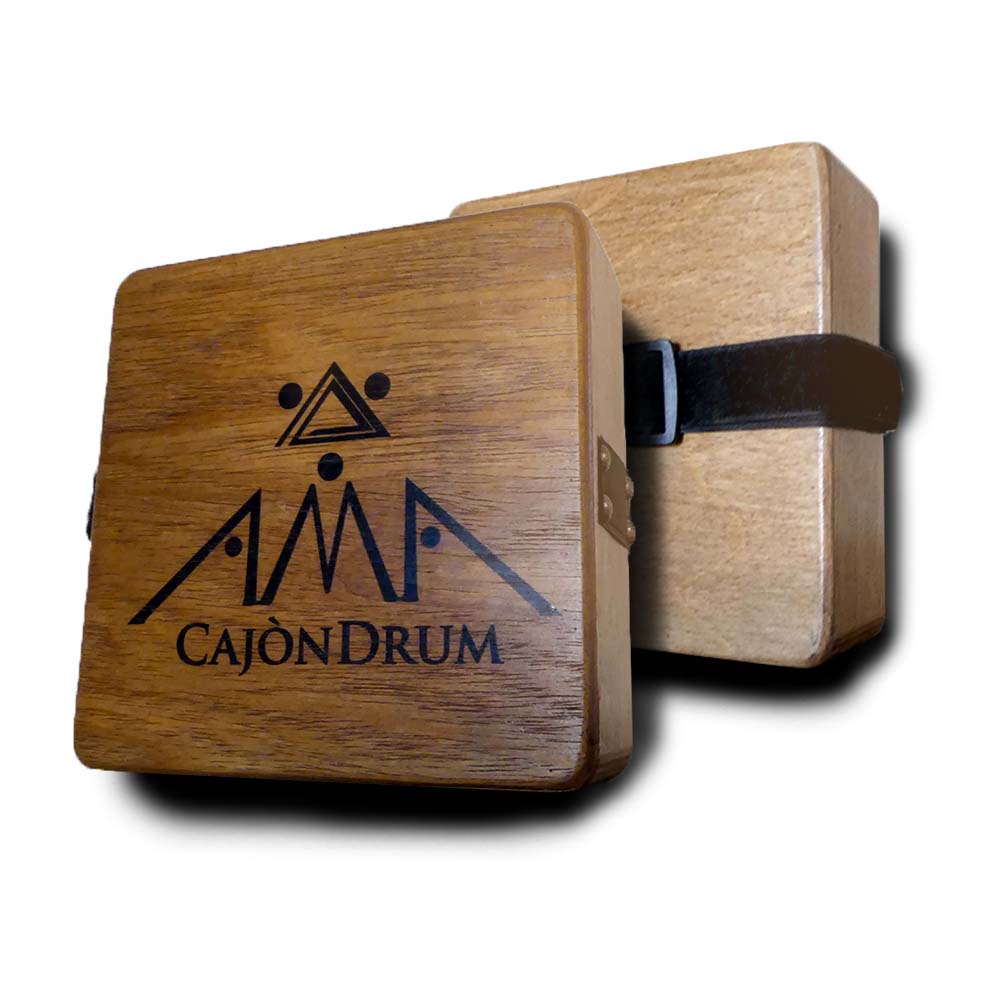
Instrument Profile
| Maker | AMACajon |
| Instrument Type | Hand Cajón / Pocket Cajón |
| Body Material | Birch and Meranti wood |
| Dimensions | 20 × 20 × 6.5 cm |
| Snare System | 1 internal snare wire |
| Mounting | Velcro strap for hand or leg attachment |
| Strap Lenght | Approx. 45 cm |
| Construction | Handmade |
| Design Purpose | Portable practice and small acoustic percussion |
Acoustic Characteristics
The AMACajon Mano is a compact pocket-sized cajón designed for portability and quick rhythmic accompaniment. Despite its small dimensions, the instrument retains the essential acoustic principles of larger cajons, producing a combination of short bass-like taps and crisp snare articulations.
The Meranti wood contributes to a lively and slightly bright tonal character, while the internal snare wire adds a subtle buzzing texture reminiscent of a traditional cajón’s snare response. Because the instrument can be attached directly to the hand or leg using a Velcro strap, players can easily integrate it into performances, rehearsals, or informal sessions.
Its compact body naturally limits the depth of low frequencies compared to full-size cajons, but the instrument compensates with fast response and rhythmic clarity, making it well suited for acoustic jam sessions, travel practice, and hybrid percussion setups.
Strengths ✅
- Extremely portable pocket-size design ideal for travel and spontaneous playing
- Can be attached to the hand or leg via Velcro strap, allowing flexible playing positions
- Handmade construction using birch and Meranti woods
- Internal snare wire provides clear rhythmic articulation
- Suitable for practice, small acoustic setups, or supplementary percussion
Considerations ⚠️
- Small size limits bass depth and overall volume compared to full-size cajons
- Primarily intended as a compact percussion accessory rather than a main rhythm instrument
- Requires adaptation of technique compared to standard seated cajon playing
- Best suited for light acoustic contexts or personal practice rather than large ensemble performances
10) AMACajon Workshop
AMACajon is a line of handcrafted cajóns designed and built by Italian maker Attilio Celona, the result of more than a decade of research and practical experience in the cultural heartlands of the cajón: Spain and Latin America. Through years of study, travel, and direct contact with some of the finest cajoneros and instrument makers, Celona developed a deep understanding of the instrument’s construction, sound, and playing techniques.
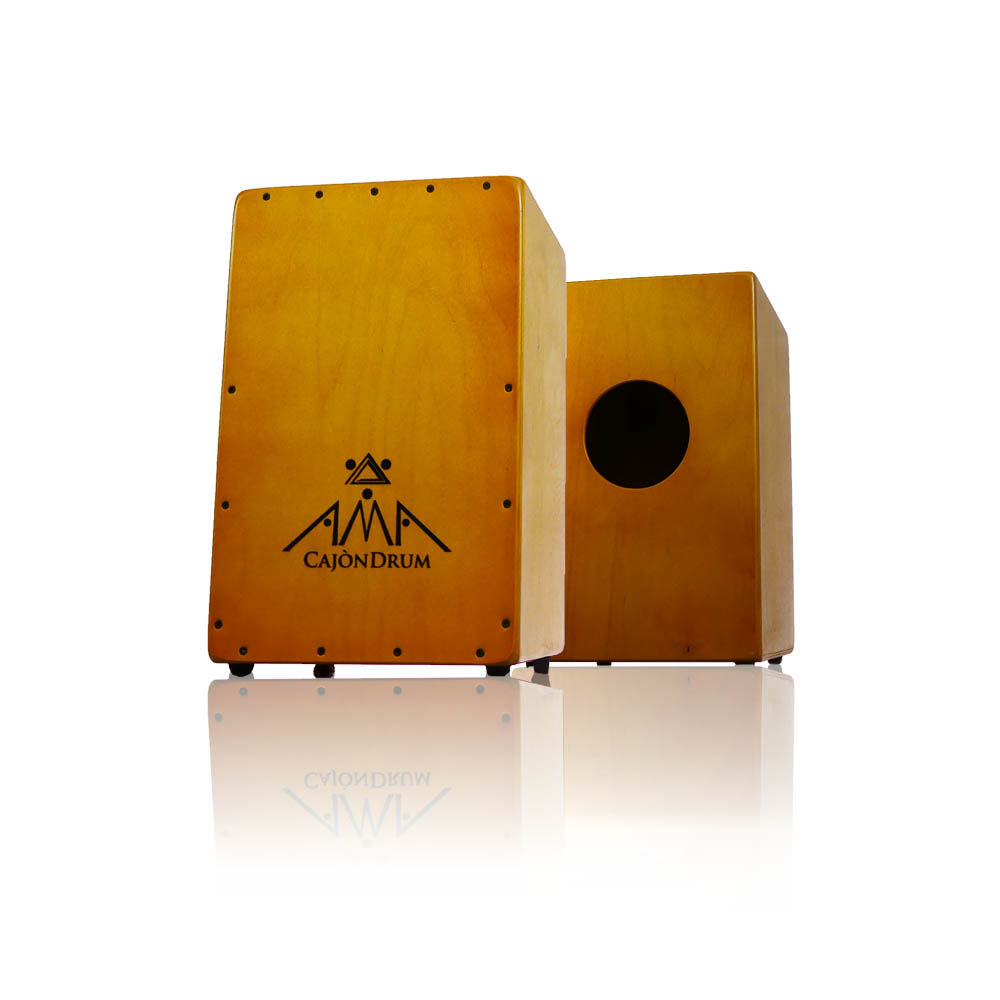
This experience led to the creation of the AMACajon series, a collection designed to meet the needs of a wide range of players—from beginners to professional percussionists. Each instrument is built with careful attention to materials, ergonomics, and tonal balance, aiming to deliver the expressive bass and articulate slap sounds that define the modern cajón.
AMACajon also offers customization options, allowing musicians to request personalized instruments with specific shapes, finishes, or aesthetic details. Players who are unsure which model best suits their musical needs can contact the workshop directly for guidance in choosing the most appropriate cajón for their style and playing context.
Final Considerations
The cajón’s apparent simplicity should not obscure the historical depth it carries. Born within Afro-Peruvian communities as an adaptive response to cultural restriction, it evolved into a rhythmic instrument capable of traveling across genres and continents without losing its structural identity.
Choosing a cajón, therefore, is not simply a practical decision about portability or price. It is a matter of tonal clarity, dynamic responsiveness, and respect for a tradition rooted in resilience and rhythmic intelligence.
“This article is written from an educational perspective for a global audience. It does not replace the knowledge transmitted within Afro-Peruvian communities, and readers are encouraged to seek information directly from original sources whenever possible.”
FAQ
Tag:Percussions
