
10 Best Handpans (2026) – Buyer’s Guide for Beginners & Professionals

Disclosure: This article may contain affiliate links. If you buy through these links, we may earn a commission at no additional cost to you.
The handpan is one of the most recent instruments to enter the global musical landscape, yet in just over two decades it has inspired a remarkable international community of musicians, listeners, and instrument makers. With its warm metallic resonance and flowing melodic patterns, the instrument has become closely associated with meditation, street performance, and contemporary acoustic music.
Despite its apparent simplicity, the handpan is the result of a highly specialized craft tradition and a complex acoustic design. Understanding its origins, structure, and musical possibilities is essential not only for choosing the right instrument, but also for appreciating the cultural ecosystem that surrounds it.
This guide explores the instrument’s historical development, construction, musical role, and practical considerations for choosing a handpan, concluding with a curated selection of instruments for beginners and advanced players.
Table of Contents
Quick Picks
Want to get straight to the point? Here are the top 3 options to consider.
BEST OVERALL

Sela Melody Handpan D Kurd SE 220
BEST FOR BEGINNERS

Handpan Drum PAN-4 – 9 Notes
BEST VALUE
Handpan Lidah
Origins of the Handpan: From the Hang to a Global Instrument
The modern handpan emerged in Switzerland at the beginning of the 2000s, when instrument makers Felix Rohner andSabina Schärer of PANArt developed a new steel instrument they called the Hang.
Rohner and Schärer had previously worked with the steelpan, the Trinidadian instrument created in the 20th century from oil drums. Their research focused on adapting the acoustic principles of steelpan tuning to a completely different design: an instrument that could be played with the hands rather than sticks, producing a softer and more intimate sound.
The result was the Hang, a convex steel instrument composed of two metal shells glued together, with a central note known as the ding surrounded by carefully tuned tone fields. Each of these fields produces a fundamental pitch along with additional harmonic overtones, creating the characteristic shimmering resonance associated with the instrument.
Initially, PANArt produced the Hang in very limited numbers and sold it directly to musicians through a selection process. Over time, demand grew dramatically, and independent instrument makers around the world began developing similar instruments. Because the name “Hang” is a registered trademark, the broader family of instruments eventually became known as handpans.
Today the handpan has evolved into a global instrument built by hundreds of specialized artisans, each developing their own tuning techniques, steel treatments, and musical scales.
From Steelpan to Handpan: Caribbean Acoustic Heritage
Although the handpan emerged in Switzerland at the beginning of the twenty-first century, part of its acoustic philosophy can be traced back to the steelpan tradition of Trinidad and Tobago.
The steelpan, developed in the Caribbean during the twentieth century from repurposed oil drums, represents one of the most sophisticated examples of modern acoustic instrument design. Its construction relies on the careful shaping and tuning of individual metal areas so that each one vibrates with a stable pitch and controlled overtones.
This principle, creating pitched tone fields directly on a steel surface, became a crucial reference point for later experimentation with steel instruments. The work of PANArt’s founders was deeply informed by years of research into steelpan acoustics and tuning methods.
The handpan does not replicate the steelpan’s orchestral role or its chromatic layout. Instead, it adapts some of the same acoustic insights to a more compact, resonant form designed for hand playing and modal scales. In this sense, the handpan can be understood not as a direct descendant of the steelpan, but as a reinterpretation of its tuning philosophy in a different musical context.
Recognizing this connection also reminds us that the handpan’s story is part of a longer dialogue between Caribbean innovation, acoustic research, and contemporary global instrument making.
Handpan vs Tongue Drum
It is important not to confuse the handpan with other visually similar instruments. In particular steel tongue drums (like RAV Labs Instruments) use a different construction method based on cut metal tongues rather than hammered tone fields. As a result, they produce a more direct and less complex sound.
The handpan’s identity lies in its combination of percussive touch, melodic structure, and overtone-rich resonance, placing it between rhythm and harmony rather than within a single musical category.
| Feature | Handpan | Tongue Drum |
| Construction | Hammered tone fields | Cut metal tongues |
| Sound | Complex overtones, “halo” resonance | More direct, bell-like tone |
| Sustain | Controlled and balanced | Often longer and more uniform |
| Technique | Played with fingers | Fingers or mallets |
Understanding this distinction is essential when choosing an instrument, as the playing experience and sonic result are fundamentally different.

How the Handpan Produces Its Sound
At first glance the handpan appears simple, but its acoustic design is extremely sophisticated.
The instrument consists of two steel hemispheres fused together to create a sealed resonating chamber. On the upper surface, a series of hammered tone fields form the playable notes of the instrument. Each of these notes is precisely shaped so that multiple vibration modes align harmonically.
When struck gently with the fingers or palms, the steel vibrates in several frequencies at once: a fundamental pitch, an octave, and often a compound fifth. This layered resonance is one of the defining acoustic characteristics of the instrument.
Its notes are arranged according to a specific scale determined during the tuning process, which allows musicians to create flowing melodic patterns without producing dissonance.
Because every instrument is tuned individually by a craftsman, no two handpans are exactly identical, even when they share the same scale.
Materials, Steel Treatments and Sound Character
The sonic character of a handpan depends heavily on the type of steel used and the treatment applied during the manufacturing process.
Most contemporary handpans are made from nitrided steel or stainless steel, each offering a different balance between sustain, warmth, and resistance to humidity.
Nitrided steel was widely used in early instruments because it produces a relatively dry and controlled warm sound, which many players appreciate for rhythmic clarity. Stainless steel, introduced later by several makers, tends to produce longer sustain and a more atmospheric resonance and a brighter tone, qualities that have contributed to the instrument’s popularity in ambient and meditative music.
Beyond the material itself, the quality of a handpan depends largely on the skill of the maker. The shaping, hammering, and tuning process requires years of experience, and even small adjustments can dramatically affect the stability and clarity of the notes.
Scales and Musical Possibilities
One of the most distinctive aspects of the handpan is its scale-based design. Unlike instruments such as the piano or guitar, a handpan typically contains a limited set of notes arranged around the central tone.
Most instruments feature between eight and ten notes, although extended models may include additional notes placed on the bottom shell. Rather than restricting musical expression, this limitation often encourages a highly intuitive style of playing, where rhythm, melody, and resonance blend into continuous patterns.
The scales themselves draw inspiration from musical traditions around the world. Some are based on Western minor modes, while others evoke Middle Eastern, Asian, or Mediterranean tonalities. For beginners who plan to play solo, the choice of scale is often guided by personal taste and emotional resonance. Musicians who intend to perform with others may instead consider how their instrument’s scale interacts with common tonal centers used in ensemble playing.
The handpan is a relatively recent instrument developed in the early 2000s, inspired by the steelpan tradition but built with a completely different playing technique and acoustic design.
More detailed information about each scale will be explored in the individual instrument sections.
How to Choose Your First Handpan
Selecting a handpan is a very different experience from purchasing most musical instruments. Because each instrument is handcrafted and individually tuned, two handpans with the same scale and number of notes may still feel very different in the hands of the player.
For this reason, the most important factor is not technical specification but the relationship you develop with the instrument’s sound. If a handpan resonates emotionally when you hear it, that connection is often more meaningful than any purely technical feature.
Other factors to consider include:
- The material: The type of steel affects sustain and maintenance,
- The scale: determines the musical atmosphere of the instrument, and the number of notes influences how much harmonic variety is available during performance.
- The price: because handpans are handcrafted objects, prices can range from a few hundred euros for entry-level models to several thousand for instruments built by highly regarded makers.
Boutique Makers vs Factory Handpans
The handpan world includes both independent artisans and larger-scale manufacturers, each offering different advantages.
Boutique makers typically produce instruments in small quantities, focusing on precision tuning, material selection, and acoustic refinement. These instruments often exhibit greater individuality and depth of sound.
Factory-produced handpans, on the other hand, offer greater consistency and accessibility, making them suitable for beginners or players seeking a reliable entry point.
Understanding this distinction helps clarify differences in price, availability, and sound quality.
The following selection reflects these criteria and aims to support both beginners and advanced players in making an informed choice.
The 10 Best Handpan
Best Low Budget Handpan for Beginners
1) Handpan Drum PAN-4 – 9 Notes
Instrument Profile
| Brand | PAN-4 |
| Number of Notes | 9 |
| Scale | D Minor |
| Material | Nitrided steel |
| Diameter | approx. 22.8 inches |
| Construction | Handmade |
| Included Accessories | High-quality padded bag |
Acoustic Characteristics
The 9 Notes Handpan PAN-4 produces a warm, resonant, and meditative sound, characteristic of handpans tuned in D minor. Each of the nine tone fields is carefully tuned to create a harmonically coherent scale, allowing players to produce fluid melodic patterns without dissonance.
The nitrided steel construction enhances sustain, stability, and resistance to environmental changes, contributing to a clear and balanced tonal response across all notes. The central note (ding) provides a tonal anchor, while the surrounding notes offer a smooth, bell-like timbre with long decay, ideal for ambient, improvisational, and contemplative playing.
The instrument’s layout encourages intuitive exploration, making it suitable for both structured compositions and free-form expression.
Strengths ✅
- D minor tuning offers a versatile and widely used musical scale
- Nitrided steel improves durability and tuning stability
- Warm, resonant sound with long sustain
- Intuitive layout suitable for beginners and experienced players
- Includes padded bag for protection and transport
Considerations ⚠️
- Fixed tuning limits modulation to other keys
- Requires careful handling to avoid dents or surface damage
- Less suitable for highly complex harmonic modulation compared to multi-scale instruments
Best Professional Handpan
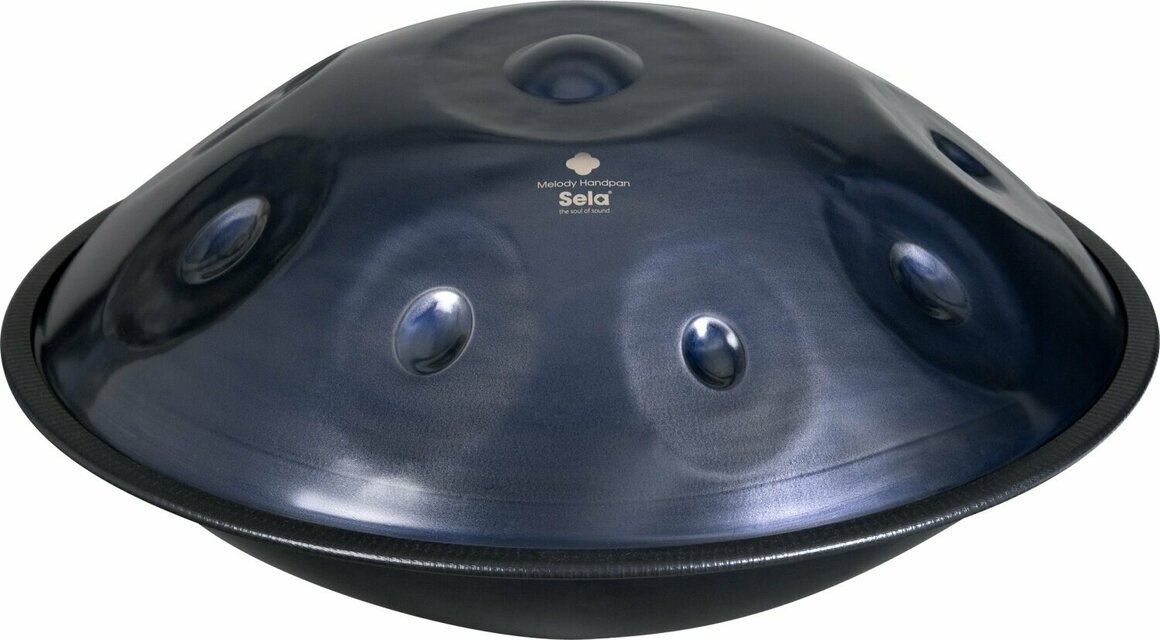
2) Sela Melody Handpan D Kurd SE 220
Instrument Profile
| Brand | Sela |
| Model | Melody Handpan SE 220 |
| Number of Notes | 9 |
| Scale | D Kurd (440 Hz) |
| Notes | D3 / A3, Bb3, C4, D4, E4, F4, G4, A4 |
| Material | Nitrided steel |
| Tuning | Professionally tuned |
| Color | Dark Petrol (dark grey) |
| Construction | Handmade |
| Included Accessories | Padded bag with shoulder straps |
Acoustic Characteristics
The Sela Melody Handpan SE 220 in D Kurd offers a deep, balanced, and harmonically rich sound, making it one of the most versatile handpan tunings available. The D Kurd scale combines a minor tonal center with both melancholic and slightly brighter intervals, allowing for expressive melodic phrasing across different musical moods.
The nitrided steel construction enhances sustain, tuning stability, and resistance to environmental factors, resulting in a clear and consistent tone across all notes. The central D3 acts as a grounding bass note, while the surrounding tones provide a smooth, bell-like resonance with long decay, ideal for ambient music, meditation, and melodic improvisation.
Sela is a well-established brand in the handpan and percussion market, known for producing instruments that balance accessible pricing with reliable tuning quality. Their handpans are designed to be both beginner-friendly and suitable for more advanced players, offering a consistent playing experience without the variability often found in purely artisanal instruments.
Strengths ✅
- Versatile D Kurd scale suitable for multiple musical styles
- Nitrided steel ensures durability and stable tuning
- Warm, resonant sound with long sustain
- Reliable build quality from an established brand
- Includes padded backpack-style case for easy transport
- Suitable for both beginners and intermediate players
Considerations ⚠️
- Fixed tuning limits modulation to other keys
- Factory-made consistency may lack the uniqueness of fully artisanal handpans
- Requires careful handling to avoid dents or surface damage
- Less customizable compared to bespoke handpan makers
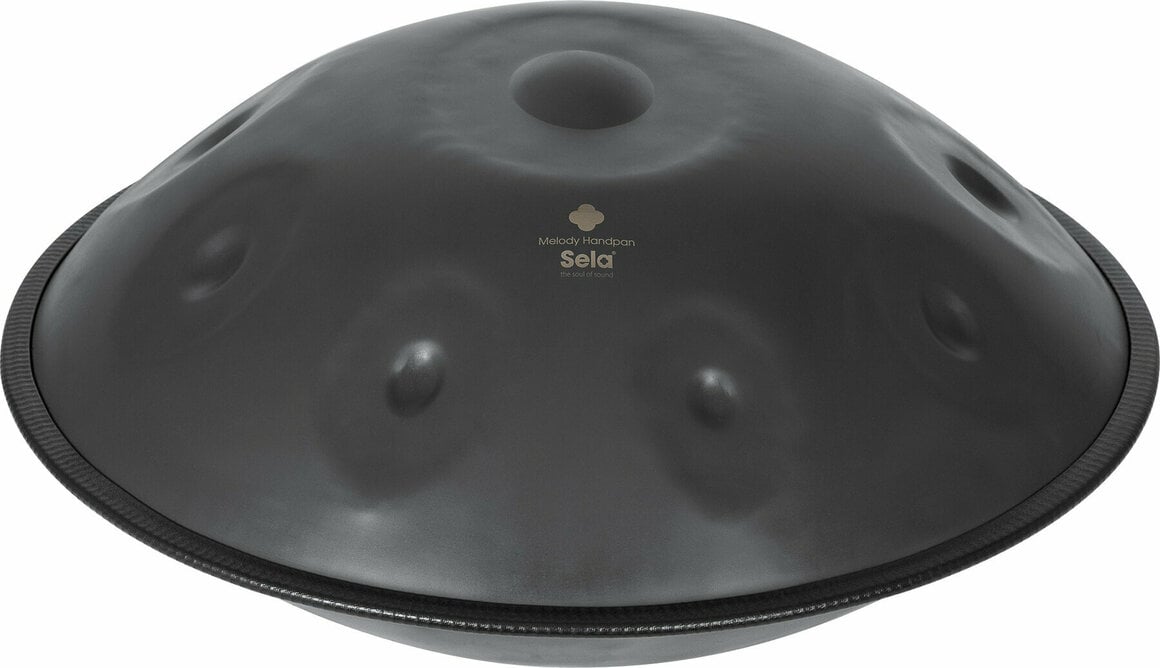
3) Sela Melody Handpan D Amara SE 221
Instrument Profile
| Brand | Sela |
| Model | Melody Handpan SE 221 |
| Number of Notes | 9 |
| Scale | D Amara (440 Hz) |
| Notes | D3 / A3, C4, D4, E4, F4, G4, A4, C5 |
| Material | Nitrided steel |
| Tuning | Professionally tuned |
| Color | Dark Petrol (dark grey) |
| Construction | Handmade |
| Included Accessories | Padded bag with shoulder straps |
Acoustic Characteristics
The Sela Melody Handpan SE 221 in D Amara produces a warm, open, and uplifting tonal character, making it one of the most accessible and widely appreciated handpan tunings. Compared to D Kurd, the D Amara scale has a more consonant and flowing structure, allowing melodies to develop naturally with minimal tension.
The nitrided steel construction enhances sustain, clarity, and tuning stability, giving each note a soft, bell-like attack followed by a long, smooth decay. The central D3 provides a stable tonal anchor, while the surrounding notes create a balanced and harmonious sound field, ideal for meditative playing, improvisation, and melodic exploration.
Thanks to its intuitive layout and forgiving harmonic structure, the D Amara scale allows even simple patterns to sound musically complete and expressive.
Sela is a well-established brand in the handpan and percussion market, known for producing instruments that balance accessible pricing with reliable tuning quality. Their handpans are designed to be both beginner-friendly and suitable for more advanced players, offering a consistent playing experience without the variability often found in purely artisanal instruments.
Strengths ✅
- Highly intuitive D Amara scale, ideal for beginners
- Warm, flowing sound with minimal dissonance
- Nitrided steel ensures durability and stable tuning
- Long sustain and balanced resonance across all notes
- Reliable quality from an established brand
- Includes padded backpack-style case for easy transport
Considerations ⚠️
- Less harmonic tension compared to more complex scales (e.g. Kurd)
- Fixed tuning limits modulation to other tonalities
- Requires careful handling to prevent surface damage
- Factory consistency may lack the individuality of custom-built handpans
4) Sela Harmony Handpan D Sabye 213

Instrument Profile
| Brand | Sela |
| Model | Harmony Handpan 213 |
| Number of Notes | 9 |
| Scale | D Sabye (440 Hz) |
| Notes | D3 / G3, A3, B3, C#4, D4, E4, F#4, A4 |
| Material | Stainless steel |
| Tuning | Professionally tuned |
| Color | Gold |
| Construction | Handmade |
| Included Accessories | Padded bag with shoulder straps |
Acoustic Characteristics
The Sela Harmony Handpan D Sabye 213 offers a bright, clear, and highly articulate tonal character, distinct from the warmer, darker sound of nitrided steel handpans. The stainless steel construction provides long sustain and enhanced projection, making each note ring with clarity and definition.
The D Sabye scale introduces a more luminous and slightly more complex harmonic color, thanks to intervals such as the major third (F#) and raised fourth (C#). This gives the instrument a more open and uplifting sound palette, suitable for melodic exploration that moves between meditative and expressive tonalities.
Compared to more common scales like D Amara, the D Sabye offers greater harmonic variety, allowing for both stable melodic phrases and more nuanced musical tension.
Sela is a well-established brand in the handpan and percussion market, known for producing instruments that balance accessible pricing with reliable tuning quality. Their handpans are designed to be both beginner-friendly and suitable for more advanced players, offering a consistent playing experience without the variability often found in purely artisanal instruments.
Strengths ✅
- Bright and clear tone with long sustain due to stainless steel construction
- D Sabye scale offers a more expressive and harmonically rich palette
- Strong projection suitable for outdoor and live performance
- Professionally tuned for consistent sound quality
- Includes padded backpack-style case for transport
- Suitable for intermediate and advanced players
Considerations ⚠️
- Brighter tone may feel less warm compared to nitrided steel models
- More complex scale may be less intuitive for complete beginners
- Fixed tuning limits modulation to other tonalities
- Requires careful handling to avoid surface damage
5) RAV Labs Vast D Celtic Minor

Instrument Profile
| Brand | RAV Labs |
| Model | Vast |
| Number of Notes | 9 |
| Scale | D Celtic Minor |
| Notes | D3, A3, C4, D4, E4, F4, G4, A4, C5 |
| Material | 2 mm steel |
| Diameter | approx. 51 cm |
| Weight | approx. 5.9 kg |
| Height | approx. 17 cm |
| Construction | Handmade |
| Playing Method | Fingers or mallets |
Acoustic Characteristics
The RAV Labs Vast D Celtic Minor produces a deep, warm, and highly resonant sound, distinct from traditional handpans due to its tongue drum construction. The thick 2 mm steel body allows for extended sustain, strong projection, and a rich low-frequency response, giving the instrument a more grounded and meditative tonal character.
The D Celtic Minor scale is one of the most widely used tunings, known for its balanced emotional range, capable of expressing both introspective and uplifting moods. The layout encourages fluid melodic movement, while maintaining harmonic coherence even in simple patterns.
RAV Labs is widely recognized as one of the leading manufacturers of modern tongue drums, known for combining innovative design with high tuning precision. Compared to traditional handpans, RAV Vast instruments offer a more stable structure, longer sustain, and greater durability, making them particularly suitable for both beginners and professional musicians.
Strengths ✅
- Deep, warm tone with long sustain and strong projection
- Durable 2 mm steel construction improves stability and longevity
- D Celtic Minor scale is intuitive and musically versatile
- High tuning precision from a leading manufacturer
- Suitable for both finger playing and mallet techniques
- More robust and less fragile than traditional handpans
Considerations ⚠️
- Heavier and less portable than some handpans
- Different playing technique compared to handpan instruments
- Fixed tuning limits modulation to other tonalities
- Less overtone shimmer compared to handpans due to tongue design
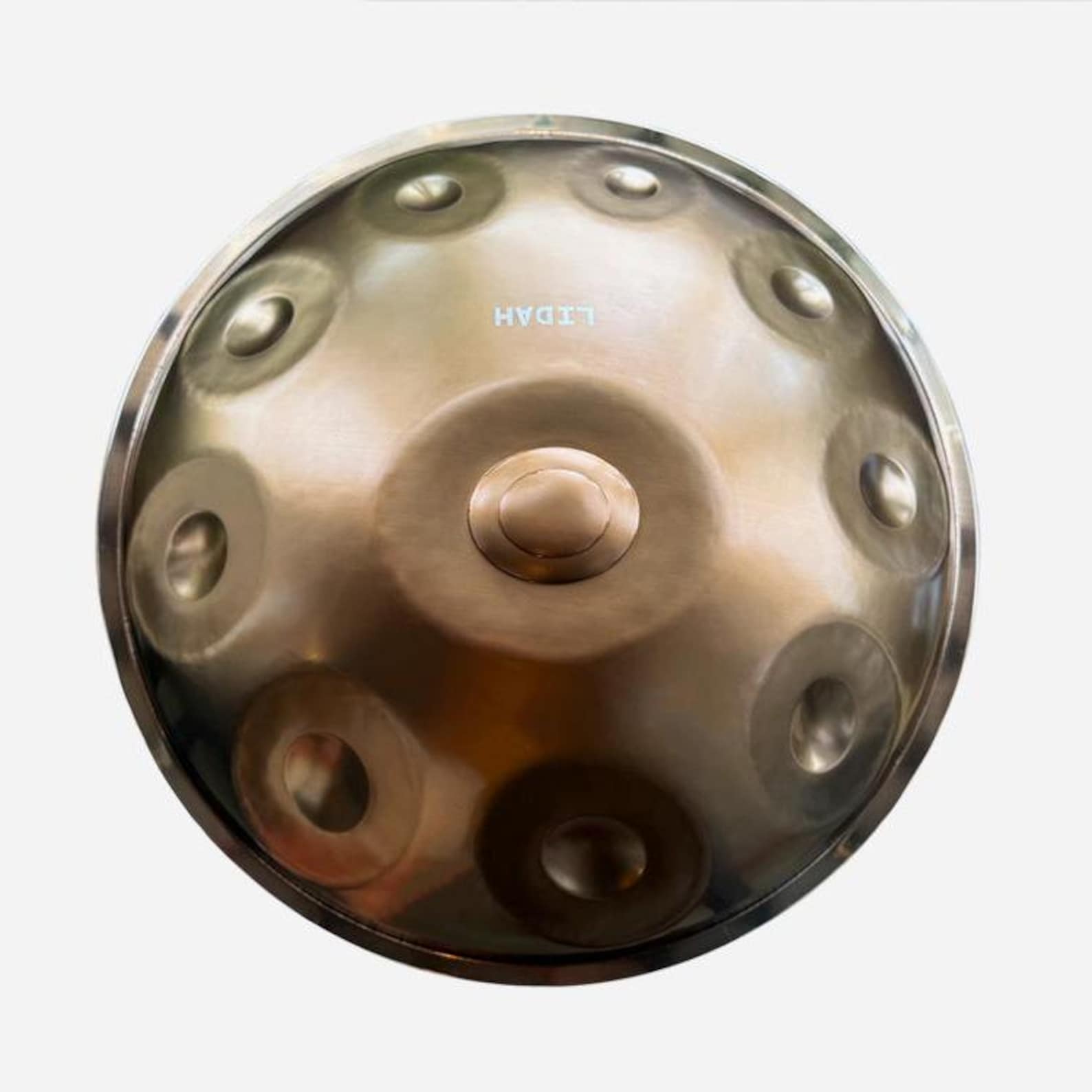
6) Handpan Lidah
Instrument Profile
| Brand | Lidah |
| Number of Notes | 9 or 10 (depending on scale) |
| Scale | D Minor, F Pygmy, D Ashakiran, C Ashakiran |
| Material | Stainless steel |
| Tuning | 440 Hz (432 Hz optional) |
| Dimensions | approx. 53 × 53 × 26 cm |
| Weight | approx. 4.5 kg |
| Construction | Handmade |
| Included Accessories | Carrying bag, stand, ropes, oil, certificate, online course |
Acoustic Characteristics
The Lidah Handpan offers a warm, deep and immersive sound, shaped by its stainless steel construction, which provides long sustain and clear projection. The instrument is available in multiple scales, each with a distinct emotional character: the D Minor scale emphasizes a melancholic and meditative atmosphere, the F Pygmy offers a darker and more hypnotic tonal palette, while the Ashakiran scales introduce brighter and more expressive harmonic colors.
The layout of 9 or 10 notes allows for intuitive melodic exploration, while still offering enough range for more developed musical phrasing. The stainless steel body enhances durability and ensures consistent resonance across the tonal fields.
Lidah positions itself as a boutique maker, emphasizing handcrafted production in Bali and a focus on quality over mass manufacturing. The brand also integrates a broader musical ecosystem by including educational material and accessories, supporting both beginners and more experienced players in developing their practice.
Strengths ✅
- Multiple scale options covering a wide expressive range
- Stainless steel construction with long sustain and durability
- Handcrafted instrument with attention to tuning quality
- Comprehensive accessory package (bag, stand, oil, course, etc.)
- Suitable for both beginners and intermediate players
- Strong aesthetic and artisanal identity
Considerations ⚠️
- Fixed tuning limits modulation to other tonalities
- Choice of scale significantly impacts playing experience
- Less standardized compared to major industrial brands
- Requires careful handling to preserve tuning and surface quality
7) Sela Majesty Handpan F2 Pygmy17 314

Instrument Profile
| Brand | Sela |
| Model | Majesty Handpan 314 |
| Number of Notes | 17 (9 + 8 bottom notes) |
| Scale | F2 Pygmy 17 (440 Hz) |
| Notes | F2 – (C3, Eb3), F3, G3, Ab3, (Bb3), C4, (Db4), Eb4, F4, G4, Ab4, (C4, Db5, Eb5, F5) |
| Material | Stainless steel |
| Tuning | Professionally tuned |
| Construction | Handmade |
| Diameter | approx. 58 cm |
| Weight | approx. 5.7 kg |
| Finish | Mirror finish |
| Included Accessories | Padded bag with shoulder straps |
Acoustic Characteristics
The Sela Majesty Handpan F2 Pygmy 17 offers a deep, immersive, and highly complex sonic landscape, significantly expanding the expressive range compared to standard 9-note handpans. The F2 Pygmy scale is known for its dark, introspective, and hypnotic character, making it particularly suited for atmospheric, meditative, and cinematic playing.
The extended 17-note configuration (top and bottom notes) allows for greater melodic depth, harmonic layering, and rhythmic independence, enabling more advanced compositions and two-handed interplay between melody and accompaniment.
Constructed from stainless steel, the instrument delivers long sustain, strong projection, and clear note separation, while maintaining a rich, resonant low-end anchored by the F2 central tone. The mirror finish and precise tuning contribute to both aesthetic refinement and acoustic clarity.
Sela is a well-established brand in the handpan and percussion market, known for producing instruments that balance accessible pricing with reliable tuning quality. Their handpans are designed to be both beginner-friendly and suitable for more advanced players, offering a consistent playing experience without the variability often found in purely artisanal instruments.
Strengths ✅
- Extended 17-note range allows advanced melodic and harmonic exploration
- F2 Pygmy scale offers deep, atmospheric, and expressive tonal character
- Stainless steel provides long sustain and strong projection
- Bottom notes enable more complex and layered playing techniques
- Professionally tuned for high consistency and clarity
- Includes padded backpack-style case for transport
Considerations ⚠️
- More complex layout requires greater familiarity and coordination
- Heavier and less portable than standard 9-note handpans
- Higher cost compared to entry-level models
- Fixed tuning limits modulation to other tonalities
- Requires careful handling to preserve tuning and surface integrity
Best Handcrafted Handpan
8) Handpan Saraz
Saraz Handpans, founded by artisan Mark Garner, is one of the most respected boutique makers in the global handpan community. Based in the United States, Saraz is known for its individually handcrafted instruments, produced with a strong emphasis on precision tuning, material quality, and sonic consistency.
Saraz handpans are typically made from high-grade stainless steel, offering long sustain, rich harmonic content, and excellent projection. The instruments are available in a variety of scales, often extending beyond standard layouts to include expanded note configurations, making them particularly appealing to advanced players seeking greater melodic and harmonic flexibility.

What distinguishes Saraz is its balance between artisanal craftsmanship and modern production standards. Each instrument is carefully tuned to ensure clarity across all notes, while maintaining a stable and reliable playing experience. The brand has built a strong reputation among professional musicians for its consistency, durability, and refined tonal character.
Overall, Saraz Handpans represent a high-end choice, best suited for serious players and performers looking for instruments with precision, depth, and long-term reliability.
9) Handpan Ayasa
Ayasa Instruments is a well-established handpan maker based in the Netherlands, recognized for producing high-quality instruments that combine artisanal craftsmanship with modern production precision. Founded by a team of experienced makers, Ayasa has become a reference point in the European handpan scene.
Their handpans are typically crafted from stainless steel, offering long sustain, clear projection, and a balanced harmonic response. The brand is known for its consistency in tuning and build quality, making its instruments reliable across different models and scales. Ayasa offers a wide range of tunings, from widely used scales such as D Kurd and D Amara to more specialized configurations, allowing players to explore different expressive possibilities.

One of Ayasa’s distinguishing features is its focus on accessibility without compromising quality. Compared to highly exclusive boutique makers, Ayasa instruments are often more readily available while still maintaining a professional-level sound and finish.
Overall, Ayasa Instruments represents a strong mid-to-high-end option, suitable for both dedicated beginners and advanced players looking for a reliable, well-balanced handpan with consistent tuning and modern craftsmanship.
10) Handpan Battiloro
Battiloro Handpan is an Italian boutique maker known for producing high-end, handcrafted handpans with a strong focus on precision, aesthetics, and acoustic refinement. Each instrument is carefully built and tuned by hand, reflecting an artisanal approach that prioritizes sound quality, sustain, and tonal balance over mass production.
Battiloro handpans are typically crafted from stainless steel, offering long sustain, rich harmonic content, and a smooth, resonant response. The brand is particularly appreciated for its attention to detail in both tuning accuracy and visual finish, resulting in instruments that are both sonically and visually distinctive.
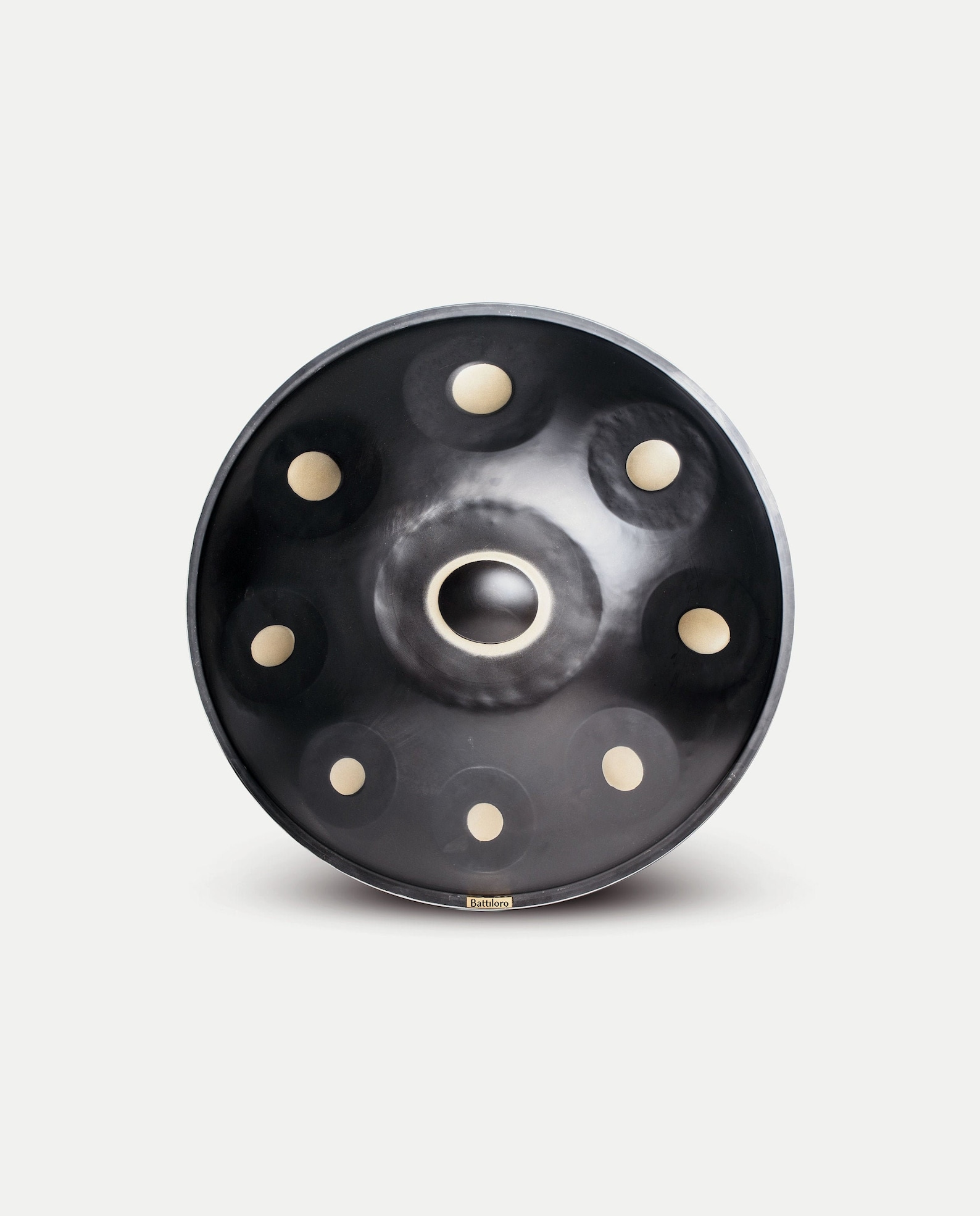
⚠️ Important: Battiloro produces only handpans tuned to 432 Hz, which means they can be played solo or with other instruments tuned to the same frequency, but are not compatible with most instruments tuned to the standard 440 Hz.
This specific tuning choice gives the instruments a slightly different tonal perception, often described as softer or more relaxed, but also requires careful consideration depending on the musical context.
Overall, Battiloro represents a specialized, high-end choice, particularly suited for players who are intentionally working within the 432 Hz tuning framework and are looking for instruments with artisanal quality and a distinctive sonic identity.
Final Considerations
The handpan is more than a modern percussion instrument; it represents a unique intersection of craftsmanship, acoustic research, and global musical exchange. In just two decades it has grown from a small experimental project in Switzerland into an international network of makers and performers exploring new sonic possibilities.
Choosing a handpan is therefore not only a technical decision but also an entry into a vibrant musical culture shaped by artisans, performers, and listeners across the world.The handpan is more than a modern percussion instrument; it represents a unique intersection of craftsmanship, acoustic research, and global musical exchange. In just two decades it has grown from a small experimental project in Switzerland into an international network of makers and performers exploring new sonic possibilities.
FAQs
Tag:Percussions

2 Comments
I think everything posted was actually very reasonable.
But, what about this? suppose you added a little information?
I am not saying your content isn’t good., but suppose you added a headline that makes people desire more?
I mean The 11 Best Handpan 2025 – Muzeap Buyer’s Guide is a little boring.
You should peek at Yahoo’s front page and see how they create
article headlines to get viewers interested. You might try adding a video or a pic or two to
get readers excited about what you’ve written. In my opinion, it might make your blog a little livelier.
Thank you for your thoughtful feedback, we really appreciate it.
You raise an interesting point about headlines and presentation. For this article we chose a fairly straightforward title because buyer’s guides often perform well in search engines when the topic and year are clearly stated. That said, we’re always experimenting with ways to make our articles more engaging for readers while keeping them informative and easy to navigate.
We also agree that visual elements can enhance the experience. Handpan music in particular benefits from being heard as well as described, so we’re currently considering adding additional media such as performance videos or sound demonstrations in future updates.
Thanks again for taking the time to share your suggestions!