
11 Best Darbukas, Doumbeks, Tombaks 2026 – Buyer’s Guide & Top Picks
Disclosure: This article may contain affiliate links. If you buy through these links, we may earn a commission at no additional cost to you.
The Darbuka, also known as darabouka, doumbek, or tabla (in certain Arabic contexts), is a goblet-shaped drum central to musical traditions across the Middle East, North Africa, and parts of Eastern Europe.
Although often grouped under a single name, the instrument exists within multiple cultural frameworks: Arabic, Turkish, Egyptian, Balkan, and Persian traditions each approach it differently in construction, repertoire, and technique.
This article is written from an educational perspective for readers who may be encountering the instrument outside its cultural context. It does not replace the knowledge transmitted within original communities, nor the lived experience of practitioners. Its aim is to offer historical orientation, structural understanding, and guidance for respectful engagement.
Table of Contents
The History of the Darbuka
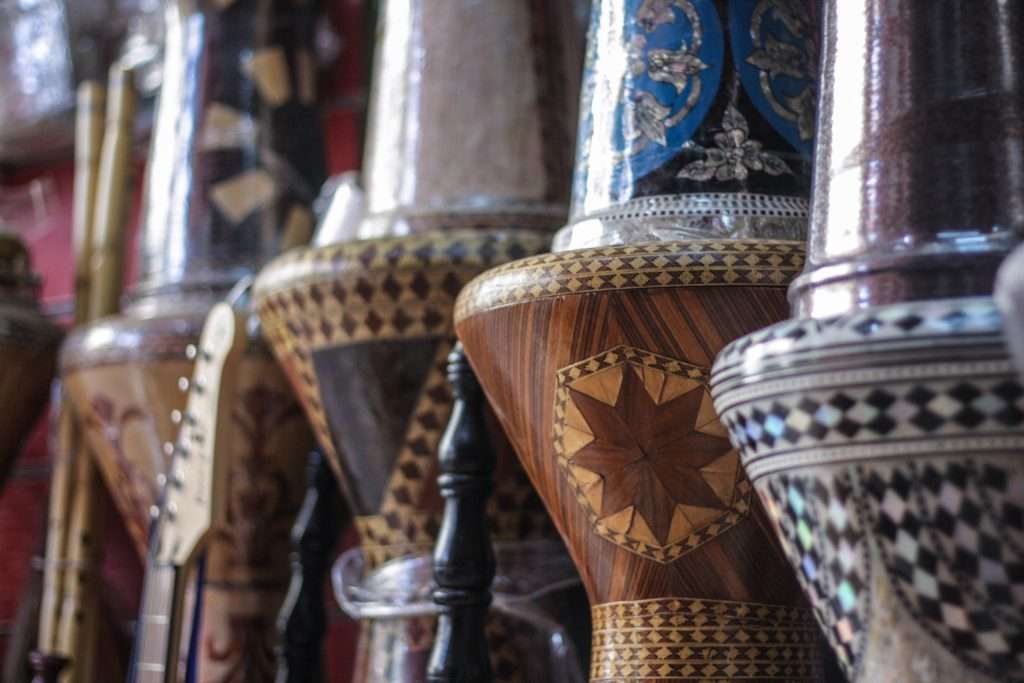
The goblet drum form predates Islam and can be traced back to ancient Mesopotamia and Egypt, where ceramic hand drums appear in archaeological iconography. The modern darbuka likely evolved from earlier clay-bodied drums used throughout the Eastern Mediterranean and Persian regions.
The Arabic root “ḍ-r-b” (ضرب), meaning “to strike”, is often cited as the linguistic origin of the name. However, terminology varies regionally:
- In Egypt and much of the Arab world: tabla or darbuka
- In Turkey: darbuka (often lighter and brighter in tone)
- In Iran: tombak (zarb), structurally related but technically distinct
- In the Balkans: doumbek
It is important not to collapse these into a single homogeneous tradition. The Egyptian tabla, for example, occupies a central role in classical Arabic ensembles (takht), while the Persian tombak developed a sophisticated solo repertoire with entirely different hand techniques.
Traditionally, darbukas were made of clay with goat or fish skin heads. The 20th century introduced metal bodies (aluminum, brass, copper) and synthetic heads, increasing durability and tuning stability, particularly important for touring musicians.
The Darbuka in Musical Context
The darbuka is not merely an accompanying drum; it articulates the rhythmic foundation of modal music systems such as maqam (Arabic and Turkish traditions).
Its patterns are built around iqa’at (Arabic rhythmic cycles) or usul (Turkish rhythmic structures), which can range from simple 4/4 patterns to complex asymmetrical cycles.
Understanding the darbuka requires understanding that rhythm here is not a background pulse, it is a structured language.
Modernization and Global Circulation
In the 20th century, the darbuka entered global music circuits, appearing in jazz, fusion, electronic, and world music contexts. Studio recording techniques further amplified its sharp articulation and bass contrast.
While this expansion increased visibility, it also led to the instrument being detached from its rhythmic systems and cultural frameworks. In many commercial settings, it is reduced to a generic “Middle Eastern sound.”
Approaching the darbuka responsibly means recognizing its embeddedness within specific musical traditions rather than treating it as an exotic texture.
To better understand the rhythmic language of the darbuka, you can explore our curated playlists of Middle Eastern Jazz and North African music, featuring examples of traditional iqa’at, ensemble playing, and solo performance.
How Does the Darbuka Work?
The darbuka is typically held under the arm, on the thigh, or between the legs depending on tradition and performance context.
Its sonic vocabulary begins with two foundational strokes:
- Dum – a deep bass tone produced at the center of the head
- Tak – a high, sharp tone struck near the rim
From these basic strokes, an advanced technique develops:
- Rolls and finger snaps
- Slaps (pa or ka variations depending on school)
- Ghost notes and rapid ornamentation
- Open and muted articulations
Turkish playing often emphasizes speed and finger-driven articulation. Egyptian style frequently balances power and ornament within ensemble settings. Persian tombak technique, though related, uses more intricate finger rolls and body resonance.
The instrument’s expressive range comes from contrast: bass vs. edge, open vs. muted, weight vs. precision.
Choosing the Best Darbuka: Beginner’s Guide
Before choosing a darbuka, it is important to consider which musical tradition you are drawn to. Egyptian, Turkish, and Persian they should not be considered interchangeable, as they belong to distinct musical systems with different techniques, repertoire, and performance roles.
The second step is to evaluate its sound and response rather than its appearance or specifications. If the instrument does not feel articulate, balanced, and inspiring under your hands, no technical feature will compensate for that. Sound and touch should guide your decision before any other consideration.
For beginners, a well-built aluminum darbuka with a synthetic head provides consistency and durability.
Intermediate and advanced players may prefer copper bodies for tonal depth or specialized Turkish models for faster articulation.
Most importantly, choose an instrument aligned with the musical tradition you intend to study. Egyptian repertoire feels different from Turkish solo style.
In addition to the sound, other factors to consider are:
- Material of the Body: Traditional clay-bodied darbukas offer warmth and organic resonance but are fragile and sensitive to humidity. Modern metal-bodied instruments provide: 1) Greater projection; 2) Stable tuning; 3) Durability for stage use. Copper models tend to produce deeper, more resonant tones but are heavier. Aluminum models are lighter and often brighter.
- Size: Standard head diameter is typically around 8–9 inches (20–23 cm), though professional models vary.
- Type of Drumhead: Synthetic heads are practical and climate-resistant. Natural skins offer organic warmth but require careful maintenance.
- Design and Decorations: Some instruments feature intricate inlays or engravings. While aesthetics matter, ensure these details do not compromise sound quality.
Egyptian vs Turkish vs Persian (Quick Orientation)
Although often grouped under the same category of goblet drums, darbuka, doumbek, and tombak belong to distinct musical traditions and should not be considered interchangeable.
The Egyptian darbuka (tabla) typically emphasizes a deep, rounded bass and balanced tone, making it central to ensemble settings such as the takht, where it supports and elaborates established rhythmic cycles (iqa’at). Its role is often both foundational and expressive within a structured musical framework.
The Turkish darbuka, by contrast, is generally lighter and more responsive, favoring speed, articulation, and virtuosic solo playing. Its brighter tonal character and technique-driven approach make it particularly suited to fast ornamentation and complex rhythmic phrasing within the usul system.
The term doumbek is often used in Balkan and Western contexts as a broader label, but it does not refer to a single standardized instrument. Depending on the region and maker, it may align more closely with either Egyptian or Turkish designs, both in construction and sound.
The Persian tombak (zarb), while visually similar, represents a fundamentally different instrument. It is deeply embedded in Persian classical music and developed a highly sophisticated solo tradition based on subtle finger techniques, tonal nuance, and body resonance, rather than the sharp contrast between bass and edge typical of darbuka playing.
Understanding these distinctions is essential: what may appear as variations of the same instrument are, in practice, different musical systems with their own aesthetics, techniques, and cultural frameworks.
The curated selection below aims to support informed decision-making while encouraging awareness of the instrument’s cultural origins.
Top 11 Darbukas to Buy
Best Darbuka for Beginners
1) Meinl Aluminium Darbuka

Instrument Profile
| Brand | Meinl Percussion |
| Model | HE-114 |
| Style | Turkish |
| Material (Shell) | Hand-hammered aluminum |
| Drumhead | Replaceable synthetic head |
| Diameter | approx. 20.32 cm (8”) |
| Height | approx. 36.19 cm (14.5”) |
| Tuning System | Bolt tuning (tuning key included) |
| Finish | Engraved ornamental design |
Acoustic Characteristics
The Meinl HE-114 Darabuka delivers a bright, articulate, and highly responsive sound, characteristic of Turkish-style goblet drums. The hand-hammered aluminum shell enhances projection and tonal clarity, producing sharp, cutting highs and a focused, punchy bass.
This instrument offers greater precision and dynamic control, particularly in fast rhythmic patterns and ornamented playing. The synthetic head provides consistent response and tuning stability, allowing for clear definition between bass (doum) and high tones (tek/ka).
The overall sound is crisp, lively, and well-balanced, making it suitable for both solo performance and ensemble settings within Middle Eastern and Mediterranean musical contexts.
Strengths ✅
- Hand-hammered aluminum shell for strong projection and clarity
- Bright, articulate sound with well-defined tones
- Turkish style suitable for fast and expressive playing
- Replaceable synthetic head for durability and consistency
- Tuning key included for easy adjustments
- Decorative engraved design with strong visual appeal
Considerations ⚠️
- Less warmth and tonal depth compared to copper darabukas
- Synthetic head offers less organic nuance than natural skin
- Metal shell can produce a more “sharp” tonal character
- Requires tuning knowledge for optimal performance
- Not as bass-heavy as larger or heavier models
2) Dest Percussion Turkish Darbuka
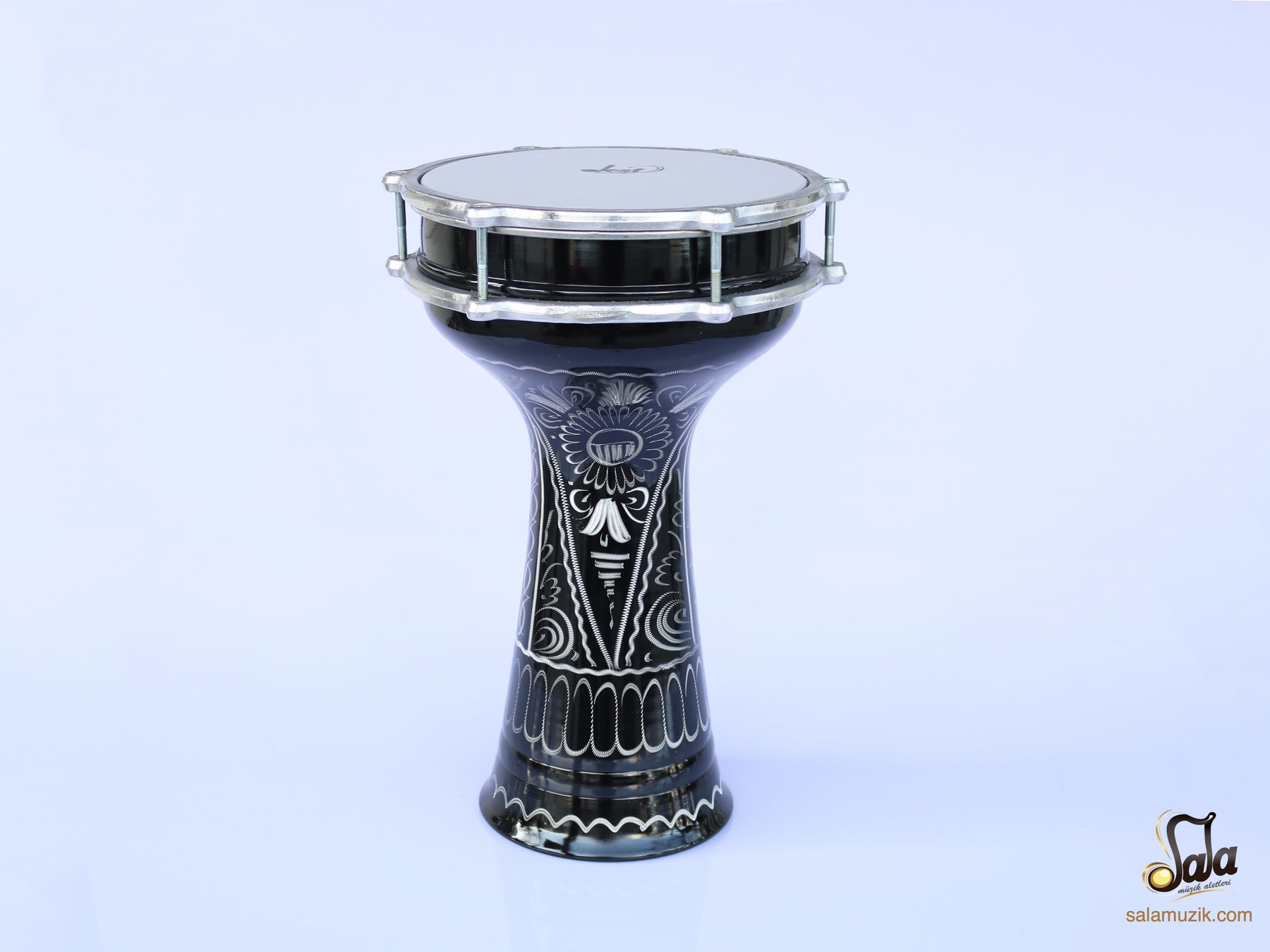
Instrument Profile
| Brand | Dest Percussion |
| Model | TDC2 |
| Style | Turkish |
| Material (Shell) | Aluminum |
| Drumhead | Synthetic |
| Diameter | approx. 22 cm |
| Height | approx. 40 cm |
| Tuning System | Bolt tuning (tuning key included) |
| Included Accessories | Soft bag, tuning key |
Acoustic Characteristics
The Dest Percussion Turkish Darbuka produces a bright, powerful, and well-projected sound, typical of larger Turkish-style aluminum darbukas. The increased diameter (22 cm) allows for a deeper and more pronounced bass response, while still maintaining crisp and articulate high tones.
The aluminum shell enhances volume and clarity, making the instrument suitable for both solo playing and ensemble contexts. The synthetic head provides consistent tuning and stable performance, ensuring clear separation between low bass strokes (doum) and high-pitched articulations (tek/ka).
Overall, the sound is balanced between depth and brightness, offering more presence and power compared to smaller entry-level models.
Strengths ✅
- Larger size provides deeper bass and stronger projection
- Bright and articulate sound with clear tonal definition
- Durable aluminum construction
- Synthetic head ensures tuning stability and low maintenance
- Includes soft bag and tuning key
- Suitable for beginners and intermediate players
Considerations ⚠️
- Less tonal warmth compared to copper or ceramic darbukas
- Synthetic head reduces organic tonal nuance
- Metal shell emphasizes brightness over depth
- Requires tuning adjustments for optimal performance
3) Dest Percussion Turkish Darbuka With Cymbals
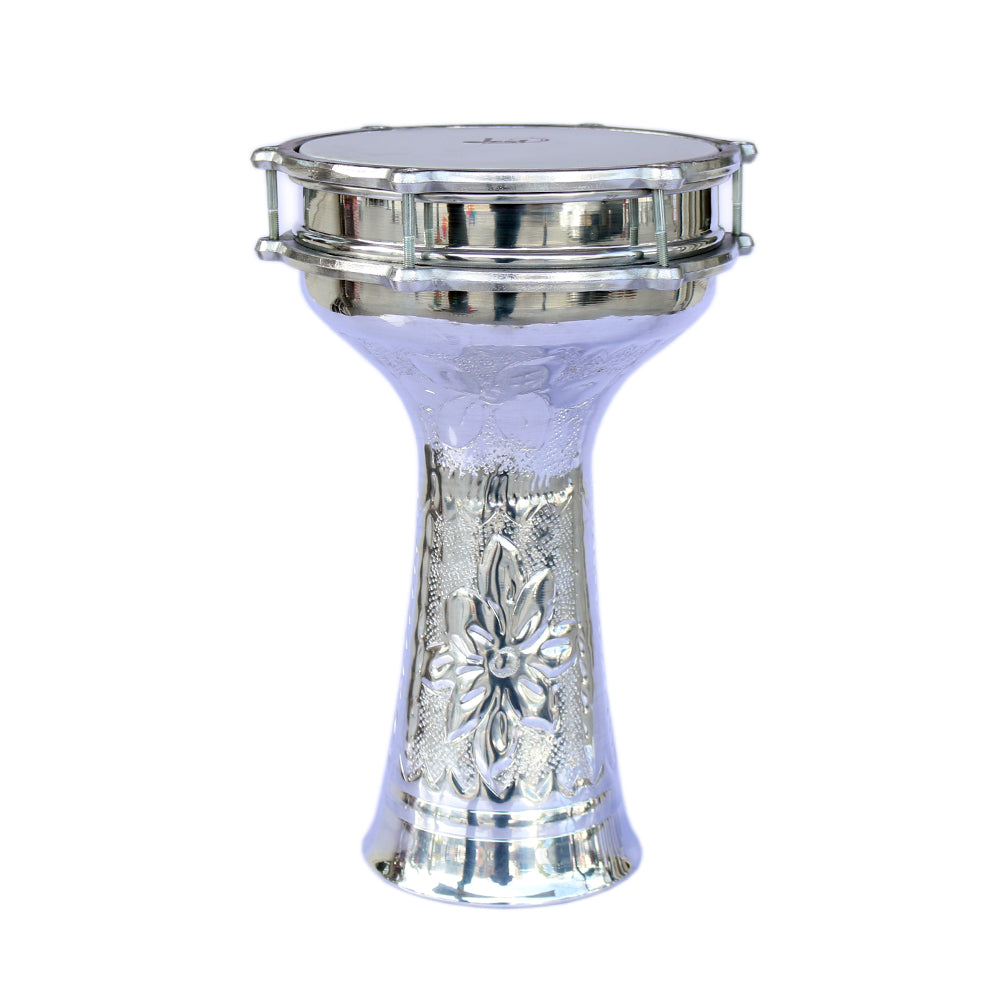
Instrument Profile
| Brand | Dest Percussion |
| Model | ZKD-222P |
| Style | Turkish |
| Material (Shell) | Cast aluminum (hand-engraved) |
| Drumhead | Tunable, replaceable synthetic head |
| Diameter | approx. 22 cm |
| Height | approx. 40 cm |
| Tuning System | Bolt tuning |
| Additional Features | Integrated cymbals |
| Construction | Hand-engraved shell |
Acoustic Characteristics
The Dest Percussion Turkish Darbuka with Cymbals offers a rich and dynamic sound palette, combining the traditional tonal range of a darbuka with the added metallic accents of integrated cymbals. The cast aluminum shell, enhanced by hand engraving, produces strong projection with deep, punchy bass (doum) and bright, ringing high tones (tek/ka).
The synthetic head ensures consistent response and tuning stability, allowing for a clear and powerful articulationacross all playing techniques. The addition of cymbals introduces a percussive shimmer, expanding the instrument’s expressive range and making it particularly suitable for rhythmic layering and performance settings.
Overall, the sound is lively, bright, and versatile, blending traditional darbuka tones with additional percussive textures.
Strengths ✅
- Expanded sonic range thanks to integrated cymbals
- Deep bass and bright highs with strong projection
- Durable cast aluminum construction
- Tunable and replaceable synthetic head
- Unique hand-engraved aesthetic
- Suitable for creative and performance-oriented playing
Considerations ⚠️
- Cymbals may not suit traditional darbuka repertoire
- Added elements can require adaptation in technique
- Synthetic head reduces organic tonal nuance
- Metal shell emphasizes brightness over warmth
- Slightly heavier and more complex than standard models
4) Egyptian Solo Doumbek
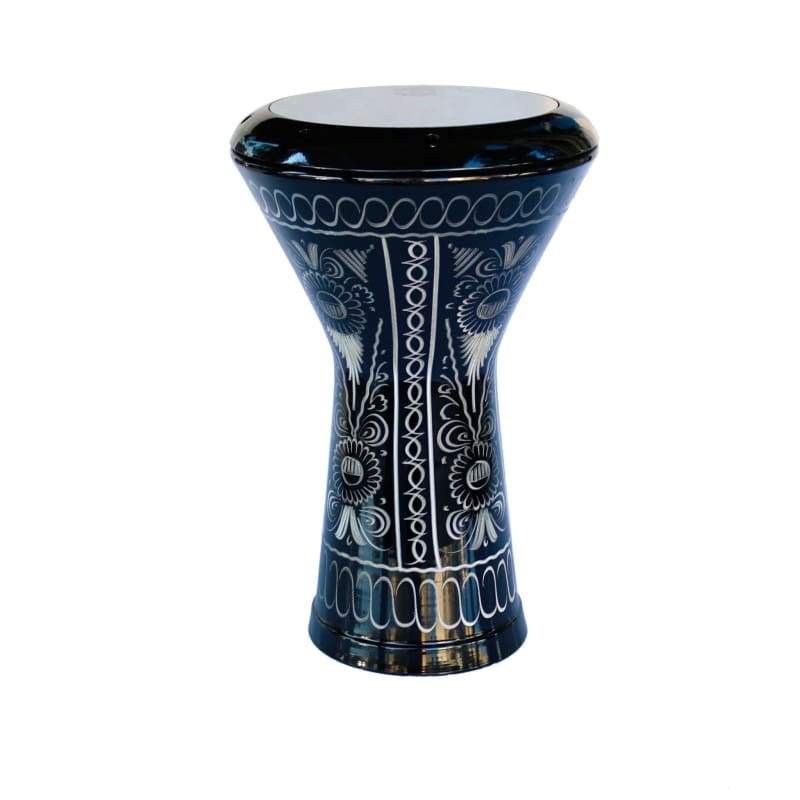
Instrument Profile
| Brand | Dest Percussion |
| Model | DED-222A |
| Style | Egyptian |
| Material (Shell) | Cast aluminum (hand-engraved) |
| Drumhead | Tunable, replaceable synthetic head |
| Diameter | approx. 22 cm |
| Height | approx. 44 cm |
| Weight | approx. 2.4 kg (5.29 lbs) |
| Tuning System | Bolt tuning |
| Finish | Hand-engraved decorative design |
Acoustic Characteristics
The Egyptian Solo Doumbek DED-222A offers a deep, resonant, and well-balanced sound, characteristic of Egyptian-style darbukas, which typically emphasize fuller bass response and rounder tonal depth compared to Turkish models.
The cast aluminum shell provides strong projection and clarity, while maintaining a slightly warmer and more grounded tonal profile. The 22 cm head combined with the taller 44 cm body enhances low-frequency resonance, producing a rich, full-bodied doum, alongside clear but less piercing high tones (tek/ka).
The synthetic head ensures consistent tuning stability and durability, making the instrument reliable across different environments. Overall, the sound is powerful yet controlled, suitable for both solo playing and ensemble contexts where a strong bass foundation is desired.
Strengths ✅
- Deep, rich bass typical of Egyptian-style darbukas
- Balanced sound with strong projection and clarity
- Durable cast aluminum construction
- Synthetic head ensures stability and low maintenance
- Larger size enhances resonance and volume
- Hand-engraved design with strong visual identity
- Suitable for solo performance and ensemble playing
Considerations ⚠️
- Less sharp and cutting highs compared to Turkish darbukas
- Synthetic head reduces organic tonal nuance
- Heavier and less portable than smaller models
- Requires tuning adjustments for optimal performance
- Metal shell emphasizes clarity over warmth compared to ceramic alternatives
5) Small Size Persian Tombak
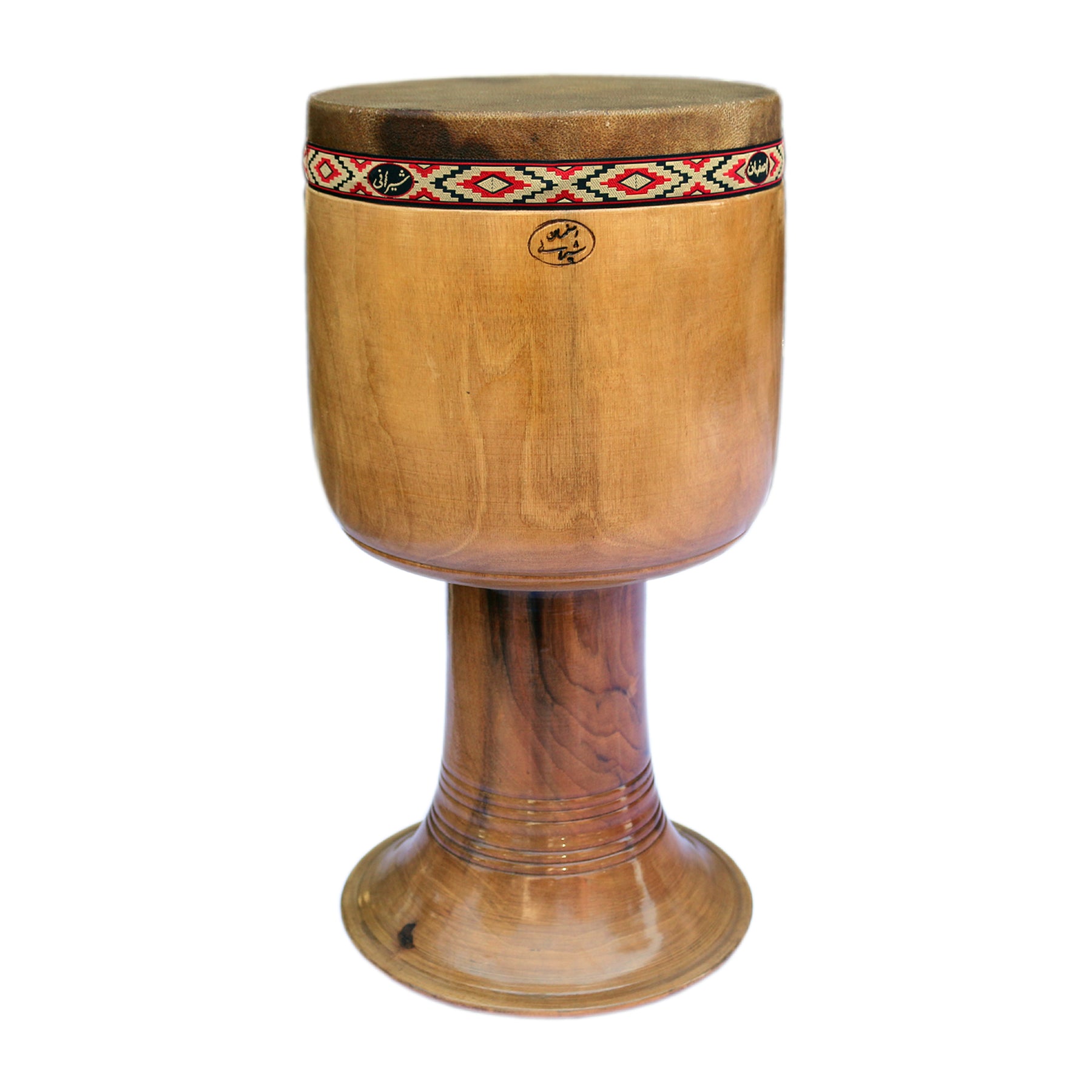
Instrument Profile
| Origin | Iran |
| Material (Body) | Walnut wood |
| Drumhead | Natural camel skin |
| Diameter | approx. 21–24 cm |
| Height | approx. 39–42 cm |
| Construction | Handcrafted |
| Included Accessories | Soft case |
Acoustic Characteristics
The Small Size Persian Tombak produces a warm, nuanced, and highly expressive sound, shaped by its wooden body and natural skin head. The walnut shell contributes to a rounded and resonant tone, while the camel skin headprovides a sensitive and responsive surface, capable of capturing subtle variations in touch.
Unlike darbukas, the tombak is designed for a more intricate and finger-based playing technique, resulting in a wide palette of tones, including deep bass sounds, soft resonant strokes, and delicate high articulations. The slightly smaller size enhances control and articulation, making it particularly suitable for detailed rhythmic expression.
The overall sound is organic, dynamic, and refined, closely tied to the expressive tradition of Persian classical music.
Strengths ✅
- Warm, natural sound with rich tonal nuance
- Camel skin head offers high sensitivity and expressive response
- Walnut body provides balanced resonance
- Compact size improves control and playability
- Suitable for traditional Persian repertoire and refined techniques
- Includes soft case for protection and transport
Considerations ⚠️
- Natural skin is sensitive to humidity and temperature
- Requires more advanced technique compared to basic hand drums
- Lower volume compared to metal goblet drums (e.g., darbuka)
- Tuning adjustments are less immediate than mechanical systems
- Best suited for seated playing and traditional contexts
Best Professional Darbuka, Doumbek and Tombak
6) Professional Classic Solo Darbuka By Emin Percussion
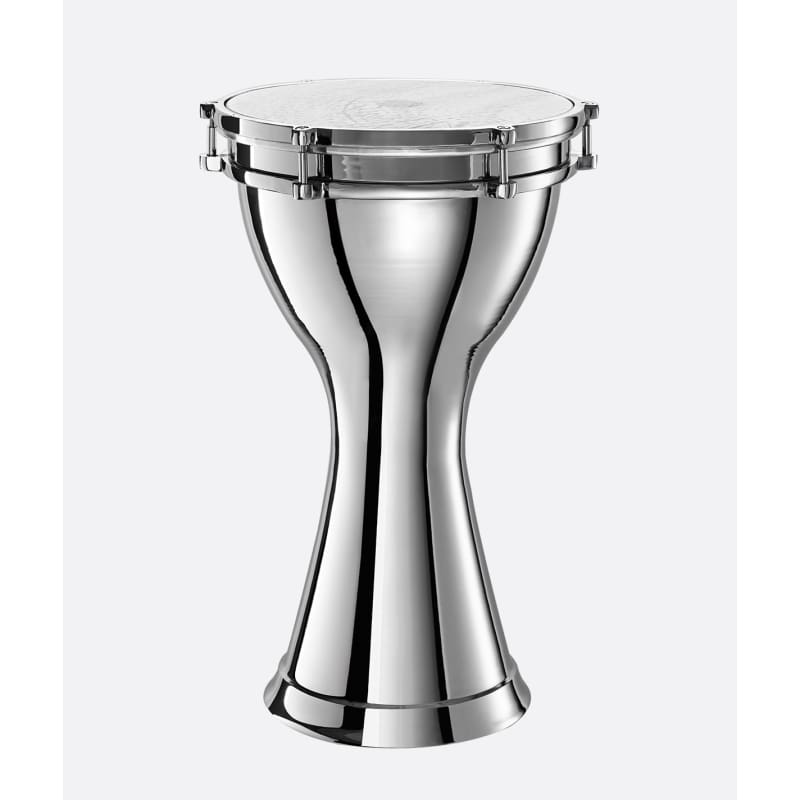
Instrument Profile
| Maker | Emin Percussion |
| Style | Turkish |
| Material (Shell) | Chrome-plated copper |
| Drumhead | Synthetic |
| Skin Diameter | approx. 22 cm |
| Body Diameter | approx. 26 cm |
| Height | approx. 42 cm |
| Weight | approx. 2.75 kg |
| Construction | Professional handcrafted |
Acoustic Characteristics
The Emin Percussion Professional Classic Solo Darbuka delivers a powerful, rich, and highly articulate sound, combining the depth of copper with the precision required for solo performance. The chrome-plated copper shellenhances both resonance and projection, producing a deep, rounded bass (doum) alongside bright, cutting high tones (tek/ka).
Compared to aluminum models, copper offers greater tonal warmth and complexity, with a more refined sustain and harmonic richness. The synthetic head ensures consistent response and tuning stability, allowing for fast, precise articulation, which is essential in advanced Turkish playing styles.
The overall sound is dynamic, expressive, and highly responsive, making it suitable for intricate techniques, rapid ornamentation, and professional performance contexts.
Strengths ✅
- High-end copper shell for rich, warm, and resonant tone
- Excellent balance between deep bass and sharp highs
- Strong projection suitable for solo and stage performance
- Synthetic head ensures stability and low maintenance
- Professional build quality by Emin Percussion
- Ideal for advanced players and complex techniques
Considerations ⚠️
- Heavier than aluminum darbukas
- Synthetic head offers less organic nuance than natural skin
- Higher price compared to entry-level instruments
- Requires refined technique to fully exploit its dynamic range
- Bright tonal edge may be pronounced in certain acoustic settings
7) Clay Ceramic Solo Darbuka by Emin Percussion
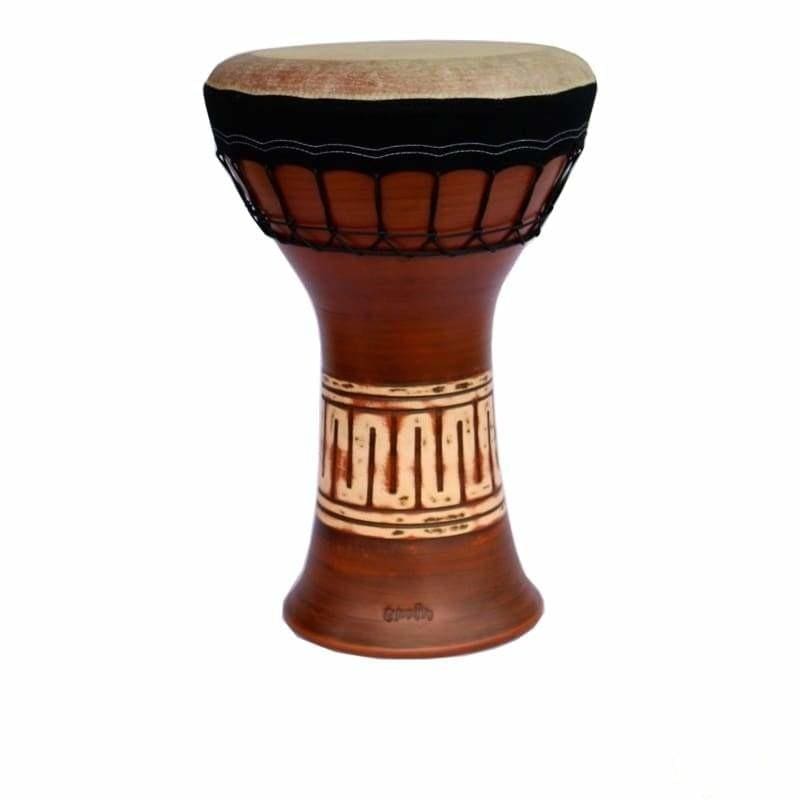
Instrument Profile
| Maker | Emin Percussion |
| Material (Shell) | Clay |
| Drumhead | Natural goat skin |
| Skin Diameter | approx. 23 cm |
| Body Diameter | approx. 30 cm |
| Height | approx. 45 cm |
| Tuning System | Mechanical tuning system (key included) |
| Included Accessories | High-quality gig bag |
Acoustic Characteristics
The Professional Clay Solo Darbuka by Emin Percussion offers a deep, warm, and highly organic sound, distinctly different from metal darbukas. The clay body produces a softer, more rounded resonance, emphasizing low frequencies and natural tonal depth rather than sharp projection.
The goat skin head enhances this character by adding rich harmonic complexity and sensitivity, allowing for subtle dynamic control and expressive nuance. The bass (doum) is full and earthy, while the higher tones are softer and less metallic, creating a more intimate and acoustic sound profile.
Compared to aluminum or copper models, this instrument prioritizes warmth, texture, and musicality over brightness and volume, making it particularly suitable for traditional, acoustic, and solo contexts.
Strengths ✅
- Warm, deep, and organic sound character
- Clay body enhances natural resonance and tonal depth
- Goat skin head provides expressive and nuanced response
- Larger size increases bass presence and sustain
- Ideal for acoustic settings and traditional styles
- Includes high-quality gig bag
Considerations ⚠️
- More fragile than metal darbukas (clay construction)
- Natural skin sensitive to humidity and temperature
- Lower projection compared to metal models
- Requires careful handling and maintenance
- Tuning system may require more attention over time
8) Sombaty LUX Doumbek Golden Tiger
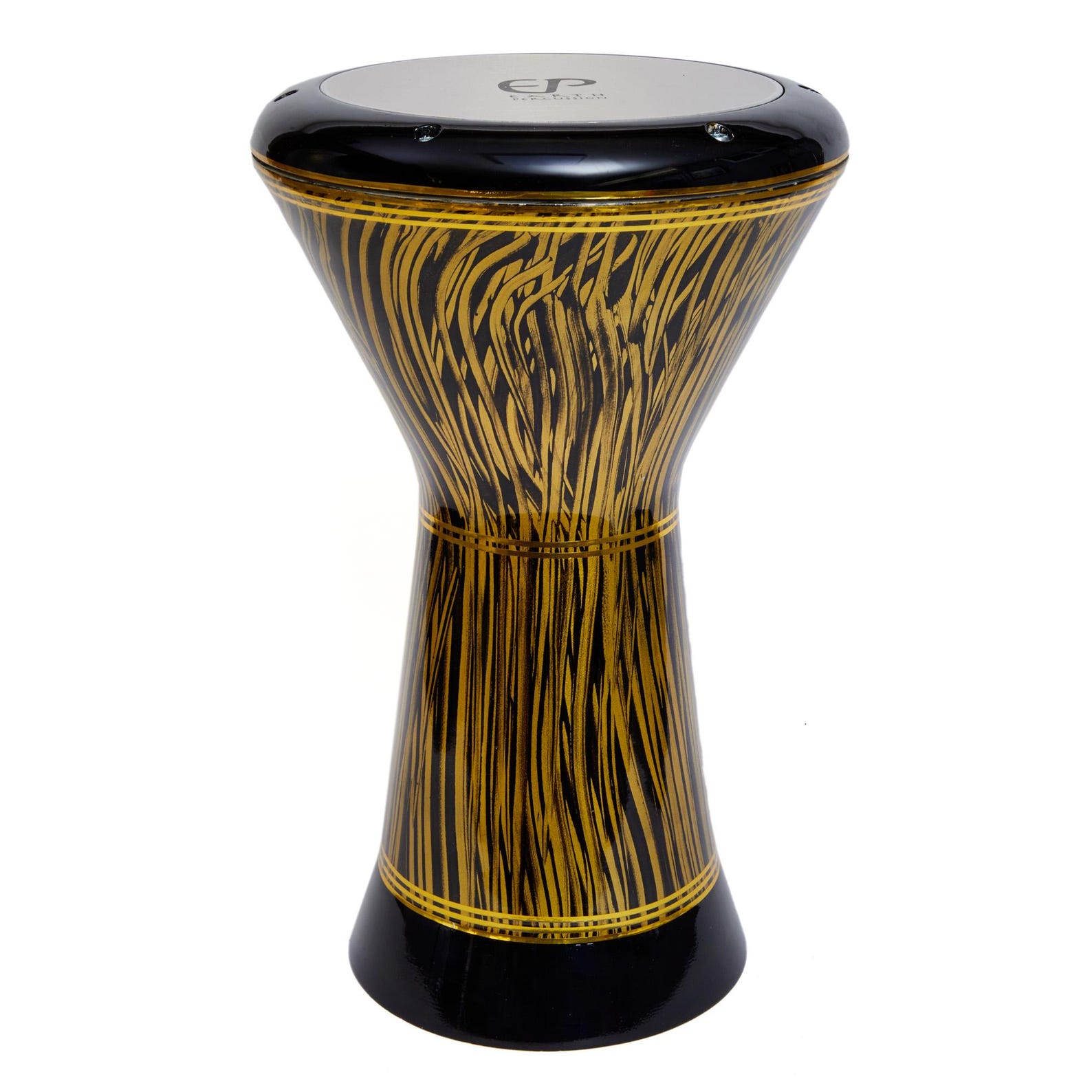
Instrument Profile
| Model | Sombaty LUX – Golden Tiger |
| Style | Egyptian (Sombaty) |
| Material (Shell) | Metal (luxury finish) |
| Drumhead | Professional clear synthetic skin |
| Skin Diameter | approx. 22.5 cm (8.9”) |
| Height | approx. 48 cm |
| Weight | approx. 5.4 kg (11.9 lbs) |
| Construction | Heavy-duty, professional build |
| Included Accessories | Padded case, extra skin |
Acoustic Characteristics
The Sombaty LUX Doumbek Golden Tiger delivers a powerful, deep, and highly resonant sound, characteristic of the larger Egyptian Sombaty style. The increased size and weight contribute to a strong, full-bodied bass (doum) with extended sustain, while the clear synthetic head provides precise, crisp articulation for high tones.
Compared to smaller darbukas, this model offers greater volume and projection, making it particularly effective in stage performance and ensemble settings. The metal shell enhances clarity and brightness, while the overall construction supports a balanced tonal range, combining depth with definition.
The result is a sound that is both commanding and refined, capable of supporting intricate rhythmic phrasing while maintaining strong presence.
Strengths ✅
- Large Sombaty size for deep bass and powerful projection
- Professional-grade clear skin for precise articulation
- Strong, resonant sound suitable for stage performance
- Durable, high-quality construction
- Includes padded case and extra skin
- Visually striking “Golden Tiger” finish
Considerations ⚠️
- Heavier than standard darbukas (less portable)
- May be excessive for beginners or casual use
- Synthetic head offers less organic nuance than natural skin
- Requires developed technique to fully control dynamics
- High volume may not suit smaller or intimate settings
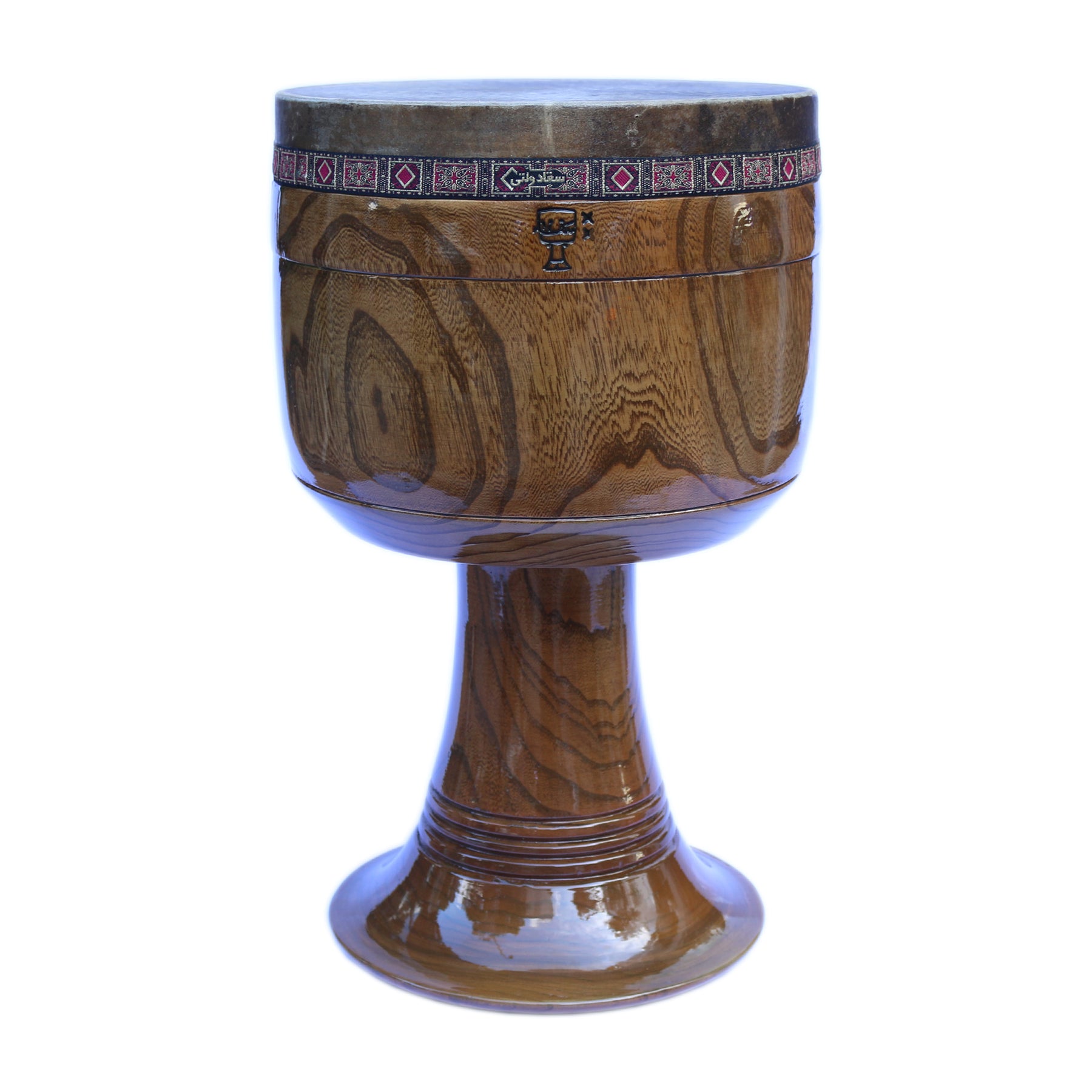
9) Professional Tombak by Dolati
Instrument Profile
| Maker | Dolati |
| Origin | Iran |
| Material (Body) | Walnut wood |
| Drumhead | Natural camel skin |
| Height | approx. 46 cm |
| Diameter | approx. 27 cm |
| Construction | Handcrafted (professional level) |
| Included Accessories | Soft case |
Acoustic Characteristics
The Professional Tombak by Dolati offers a deep, refined, and highly expressive sound, characteristic of high-level Persian percussion. The walnut body provides a warm, rounded resonance, while the larger dimensions enhance low-frequency depth and overall projection compared to smaller tombaks.
The camel skin head is extremely sensitive and responsive, allowing for a wide range of tonal colors, from deep bass tones to subtle finger articulations and delicate high-frequency textures. This responsiveness supports the intricate techniques central to Persian classical music, where touch, nuance, and micro-dynamics play a fundamental role.
The overall sound is organic, rich, and highly detailed, making it suitable for both solo performance and ensemble settings within traditional and contemporary Persian music.
Strengths ✅
- Professional craftsmanship by renowned maker Dolati
- Warm, deep, and highly nuanced tonal character
- Camel skin head offers exceptional sensitivity and dynamic control
- Larger size enhances bass response and projection
- Ideal for advanced players and traditional Persian repertoire
- Includes soft case for protection
Considerations ⚠️
- Natural skin sensitive to humidity and temperature
- Requires developed technique to fully exploit its expressive range
- Less immediate volume compared to metal percussion instruments
- Needs careful maintenance over time
- Primarily suited for seated and traditional playing contexts
10) Gawharet El Fan
Gawharet El Fan is a specialized online shop focused on Egyptian percussion instruments, with a strong emphasis on professional darbukas crafted for performance and studio use. Their catalog reflects a tradition rooted in Middle Eastern music while embracing modern construction standards.
The darbukas available on the site are primarily Egyptian-style models, often characterized by a larger body (Sombaty size) and a design that prioritizes deep bass response and balanced tonal projection. Compared to Turkish darbukas, these instruments tend to offer a fuller, rounder low-end, making them particularly suitable for accompaniment as well as solo performance.
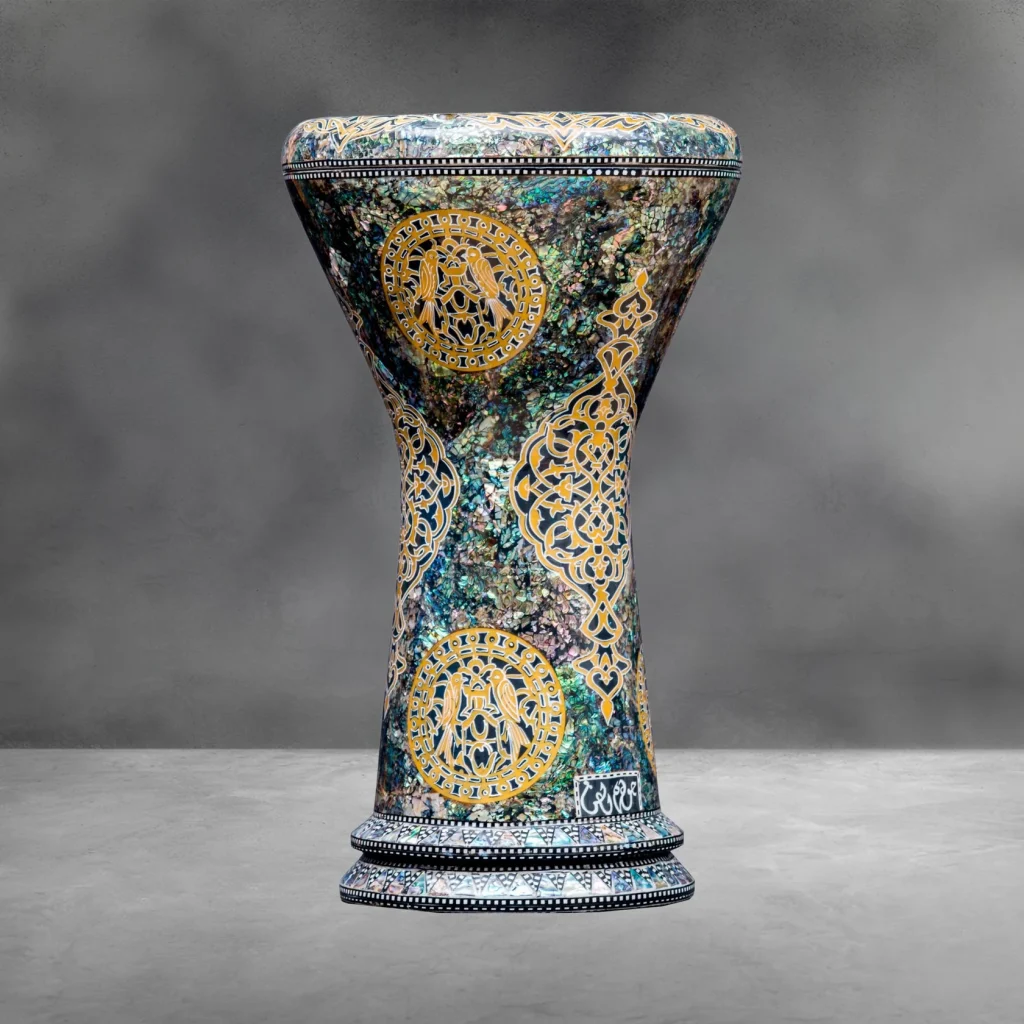
A key feature across many models is the use of metal shells (aluminum or copper) combined with synthetic drumheads, ensuring strong projection, tuning stability, and durability. This makes them reliable in both live and studio environments, especially where consistency across different conditions is required.
At the same time, the shop includes higher-end professional instruments with refined finishes and heavier builds, designed to produce greater sustain, richer bass, and more precise articulation. These models are typically aimed at experienced players who require dynamic control and tonal depth.
Overall, Gawharet El Fan positions itself as a source for serious darbuka players, offering instruments that balance traditional Egyptian sound aesthetics with modern reliability, making them suitable for stage performance, recording, and advanced study.
11) Darbuka Planet
Darbuka Planet is an online store dedicated specifically to goblet drums (darbukas and doumbeks), offering a wide selection that spans beginner instruments to high-end professional models. The platform stands out for its focus on variety and accessibility, making it a useful reference point for players at different stages.
The catalog includes both Turkish and Egyptian-style darbukas, allowing musicians to choose between different tonal identities. Turkish models typically emphasize bright, sharp articulation and fast response, while Egyptian designs—especially larger Sombaty instruments—offer a deeper, more resonant bass and a rounder overall sound.
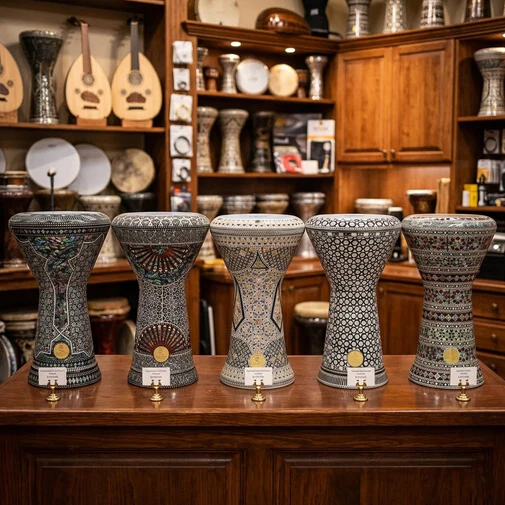
A significant portion of the instruments features metal shells (aluminum or copper) paired with synthetic drumheads, ensuring strong projection, durability, and stable tuning. At the higher end, heavier and more refined models provide greater sustain, tonal richness, and dynamic control, making them suitable for stage performance and recording.
Darbuka Planet also includes specialized and visually distinctive instruments, such as engraved shells, unique finishes, and extended-size models, appealing to players who value both sound and aesthetics.
Overall, the shop positions itself as a comprehensive marketplace for darbuka players, offering a broad spectrum of instruments that balance traditional sound characteristics with modern construction standards, suitable for practice, performance, and professional use.
Final Considerations
To approach the darbuka responsibly is to recognize its presence across distinct Middle Eastern and North African traditions, each with its own repertoire, aesthetics, and performance contexts. It requires understanding the rhythmic systems that shape its language, as well as acknowledging the clear differences between the Egyptian tabla, the Turkish darbuka, and the Persian tombak, which, though related, belong to separate musical lineages.
It also means recognizing the musicians who continue to refine and transmit these techniques today, sustaining a living rhythmic practice rather than a static tradition.
The darbuka is a rhythmic language embedded in specific cultural systems.
Choose your instrument carefully, but more importantly, choose the tradition you wish to listen to, study, and learn from.
“This article is written from an educational perspective for a global audience. It does not replace the knowledge transmitted within original communities, and readers are encouraged to seek information directly from original sources whenever possible.”
FAQs
Tag:Percussions

2 Comments
This piece is impressive and well-structured. I find the entire site extremely helpful.
Thank you, we really appreciate it. The goal is exactly that, to make things clear and genuinely useful, especially with instruments that can be confusing at first.