
6 Best Shamisens (2026) – Buyer’s Guide for Beginners & Professionals
Disclosure: This article may contain affiliate links. If you buy through these links, we may earn a commission at no additional cost to you.
The shamisen is one of the most recognizable instruments of Japanese musical culture. With its sharp, percussive tone and expressive playing techniques, it has accompanied theater, storytelling, and popular entertainment for centuries.
The shamisen reflects the evolution of Japanese urban culture from the early modern period to the present day. Technically a three-string long-necked lute, it occupies a central place in several traditions of traditional Japanese music, from Kabuki theater to regional folk performance.
This guide explores the instrument’s historical development, construction, musical role, and practical considerations for choosing a shamisen, concluding with a curated selection of instruments for beginners and advanced players.
Table of Contents

The History of the Shamisen
The word shamisen literally means “three strings.” The instrument ultimately derives from the Chinese sanxian, which traveled through the Ryukyu Islands (present-day Okinawa) before reaching mainland Japan in the 16th century. From there it rapidly spread through different regions and social contexts.
This historical route also explains the relationship between three closely related instruments. The sanxian in China, the sanshin in Okinawa, and the Japanese shamisen share the same structural concept of a long-necked three-string lute. Over time, however, each culture adapted the instrument to its own musical aesthetics. The Okinawan sanshin retained a smaller body traditionally covered with snakeskin, while the Japanese shamisen developed a larger resonating chamber and a more percussive playing technique suited to theatrical performance traditions such as Kabuki and Bunraku.
During the Edo period (1603–1868), the shamisen became closely tied to the rise of urban entertainment culture. It was adopted in Kabuki theater and Bunraku puppet drama, where musicians used it to accompany narration, dramatic action, and dance. In these contexts the instrument developed highly codified performance traditions such as nagauta, a style designed specifically for Kabuki performance.
Beyond the theater, the shamisen also became associated with geisha musical culture, where it accompanied singing, dance, and intimate salon performances. Over time, different regional and stylistic traditions emerged, each emphasizing different techniques and tonal qualities.
Today the instrument continues to live both in classical repertoires and in modern reinterpretations, where it appears in folk revivals, experimental music, and contemporary cross-genre projects.
Structure and Playing Technique
At first glance the shamisen may appear simple, yet its sound depends on a highly refined construction. The instrument consists of a square wooden body, traditionally carved from mulberry wood, which functions as a resonating chamber. The body is covered with a stretched skin membrane that gives the instrument its distinctive brightness and attack. Historically this skin was made from cat or dog hide, although most modern instruments use synthetic materials for ethical and durability reasons.
The long fretless neck allows the player to slide smoothly between notes, producing expressive glissandi and subtle pitch inflections characteristic of Japanese musical aesthetics.
Three strings run along the neck and are struck with a large triangular plectrum called the bachi. Unlike the gentle plucking used in many lutes, shamisen technique often involves a strong striking motion, producing both a pitched tone and a percussive attack. This dual character, melodic and rhythmic, makes the instrument particularly effective in theatrical settings.
The instrument can be tuned in several traditional systems. Among the most common are honchōshi, niagari, and sansagari, each altering the interval relationships between the strings and giving the music a slightly different expressive atmosphere.
Musical Styles and Repertoire
Over the centuries, the shamisen has been adapted to a wide range of musical traditions across Japan. While the instrument retains the same basic structure, differences in neck thickness, playing technique, repertoire, and ensemble context have given rise to several distinct styles.
The most widely recognized traditions include:
Nagauta Shamisen
Closely associated with Kabuki theatre, nagauta (“long song”) developed in Edo during the seventeenth century. In this repertoire the shamisen accompanies dance and dramatic action, providing elegant melodic lines, rhythmic punctuation, and structural support for vocal narration.
Jiuta Shamisen
Originating in the Osaka and Kyoto regions, jiuta developed as a refined chamber music tradition. Often performed together with instruments such as koto and shakuhachi, jiuta emphasizes lyrical phrasing, subtle ornamentation, and ensemble balance.
Tsugaru Shamisen
Perhaps the most internationally recognized style today, tsugaru shamisen emerged in northern Honshu, particularly in the Tsugaru region of Aomori. Historically associated with itinerant blind musicians, the style is known for its powerful attack, large bachi, and highly virtuosic rhythmic improvisation.
Kouta Shamisen
Kouta (“short songs”) developed within the urban entertainment culture of Edo-period Japan, particularly in geisha districts. The repertoire consists of short lyrical songs accompanied by a more delicate shamisen style emphasizing subtle phrasing and intimate expression.
Min’yō Shamisen
Min’yō refers to regional folk songs of Japan, and the shamisen is often used to accompany these vocal traditions. The playing style varies depending on the region and the specific folk repertoire being performed.
Shin-nai Shamisen
Shin-nai is a narrative style of shamisen music associated with dramatic storytelling and theatrical performance. It developed in the eighteenth century and features expressive vocal narration accompanied by distinctive shamisen phrasing.
Tokiwazu Shamisen
Another narrative style related to kabuki theatre, tokiwazu emphasizes dramatic storytelling and was historically performed in theatrical contexts alongside dance and stage action.
Kiyomoto Shamisen
A style that also developed within the world of kabuki performance, kiyomoto repertoire is characterized by expressive vocal delivery and a refined accompaniment style on the shamisen.
Gidayū Shamisen
Used in Bunraku puppet theatre, gidayū music features a large shamisen and dramatic narrative chanting. The instrument plays a powerful role supporting the storytelling and emotional intensity of the performance.
| Style | Neck Type | Musical Context |
| Nagauta Shamisen | Hosozao (thin neck) | Kabuki theatre music and classical dance accompaniment |
| Jiuta Shamisen | Chūzao (medium neck) | Chamber music traditions of Osaka and Kyoto, often performed with koto and shakuhachi |
| Tsugaru Shamisen | Futozao (thick neck) | Virtuosic folk tradition from northern Japan with strong rhythmic playing |
| Kouta Shamisen | Hosozao (thin neck) | Short lyrical songs associated with Edo-period geisha culture |
| Min’yō Shamisen | Chūzao (medium neck) | Regional folk song accompaniment across Japan |
| Shin-nai Shamisen | Chūzao (medium neck) | Narrative singing style linked to theatrical storytelling traditions |
| Tokiwazu Shamisen | Chūzao (medium neck) | Kabuki narrative music emphasizing dramatic storytelling |
| Kiyomoto Shamisen | Hosozao (thin neck) | Refined kabuki dance and vocal accompaniment style |
| Gidayū Shamisen | Futozao (thick neck) | Refined kabuki dance and vocal accompaniment style |
These stylistic differences illustrate how the same instrument can adapt to very different aesthetic contexts, from theatrical narration to folk virtuosity.
For listeners interested in hearing these traditions in context, our Japanese music playlist explores several repertoires where the shamisen plays a central role, from Kabuki and nagauta ensembles to modern reinterpretations.
Choosing the Best Shamisen: A Beginner’s Guide
When selecting a shamisen, the most important starting point remains the sound itself. If the tone of an instrument does not resonate with you, technical specifications become secondary. Listening carefully to different instruments and styles is often the best way to develop an intuitive sense of what suits your musical interests.
Other factors, however, can significantly influence both the playing experience and the long-term development of a musician.
Type and Musical Style
Different shamisen traditions use instruments with distinct structural characteristics. Larger instruments with thicker necks (futozao) are typically associated with the powerful and rhythmically driven Tsugaru style, while lighter instruments with slender necks (hosozao) are commonly used in nagauta and other classical repertoires linked to kabuki theatre.
Between these two extremes lies the chūzao, a medium-neck configuration often used in jiuta and min’yō traditions, where the instrument plays a balanced role within chamber ensembles.
Each configuration produces a different balance between projection, resonance, and playability, and understanding these differences can help players choose an instrument suited to their musical goals.
Student vs Professional Shamisen: What Actually Changes?
While the basic structure of the shamisen remains consistent, instruments vary significantly in materials, craftsmanship, and tonal refinement.
Student instruments typically use synthetic skins, durable woods, and simplified construction methods designed to provide stability and affordability for beginners. These instruments are ideal for learning basic technique and repertoire.
Professional instruments, by contrast, often feature higher-grade hardwood necks, carefully carved bodies, and traditionally prepared skins, producing greater tonal depth and responsiveness. The difference is not only acoustic: higher-end instruments also tend to offer greater structural stability and more refined playability.
For most beginners, a well-made student instrument is more than sufficient during the early stages of study.
Materials and Construction
Materials play an important role in both durability and sound. Traditional shamisen bodies are often made from mulberry wood, while necks may use various hardwoods chosen for strength and stability.
Historically, the instrument’s resonating membrane was made from animal skin, which provides a complex and responsive tone. Today many student instruments use synthetic skins, which are more resistant to humidity and temperature changes and require less maintenance.
Parts of a Shamisen
Understanding the main components of the instrument can also help beginners navigate different models and specifications. The shamisen is composed of several distinctive elements:
- Sao – the neck of the instrument
- Dou – the square resonating body
- Tenjin – the upper head where the tuning pegs are located
- Koma – the small bridge that supports the strings
- Sawari – a buzzing mechanism that gives the lowest string its characteristic resonance
- Neo – the cord that secures the strings to the body

Together these elements create the instrument’s characteristic timbre and playing mechanics.
Essential Shamisen Accessories
Finally, beginners should consider whether the instrument includes the accessories required for regular practice. Essential items typically include:
- Bachi (plectrum used to strike the strings)
- Spare strings
- Koma (bridge)
- Yubisuri (finger sleeve used while playing)
- Protective case
Many beginner sets include these items, making it easier to start playing immediately without purchasing additional equipment.
Hosozao, Chūzao, and Futozao: Understanding Shamisen Neck Types
Although the basic structure of the shamisen remains consistent across traditions, one of the most important differences between instruments lies in the thickness of the neck (sao). This structural variation influences both the playing technique and the musical repertoire associated with the instrument.
Three main neck types are commonly recognized:
Hosozao (thin neck)
The hosozao is the most slender type of shamisen neck. Its lighter structure allows for fast fingering and delicate articulation, making it particularly suitable for styles such as nagauta and kouta, which developed in connection with kabuki theatre and urban song traditions.
Chūzao (medium neck)
The chūzao represents a middle ground between flexibility and strength. Slightly thicker than the hosozao, it produces a warmer and more balanced tone and is commonly used in jiuta and min’yō repertoires, where the shamisen often plays a role within small ensembles.
Futozao (thick neck)
The futozao is the thickest and most robust shamisen neck. Its solid construction supports stronger string tension and powerful attack, characteristics that are essential for the energetic playing style of tsugaru shamisen, known for its virtuosic rhythmic techniques and dynamic performance.
These structural differences illustrate how the shamisen evolved to support distinct musical aesthetics, from refined theatrical accompaniment to powerful folk virtuosity.
| Neck Type | Thickness | Typical Genres | Sound Character |
| Hosozao | Thin | Nagauta, Kouta | Light, agile |
| Chūzao | Medium | Jiuta, Min’yō | Balanced, warm |
| Futozao | Thick | Tsugaru | Powerful, percussive |
The following selection reflects these criteria and aims to support both beginners and advanced players in making an informed choice.
The 6 Best Shamisen
Best Shamisen for Beginners and Intermediate
1) Suzuki Shamisen Special Set MS-8

Instrument Profile
| Neck Type | Hosozao (thin neck) |
| Neck & Pegs | ABS |
| Body | Nyatoh wood |
| Skin | Synthetic skin |
| Strings | Tetron synthetic strings |
| Dimensions | 20 × 10 × 99 cm |
| Weight | Approx. 1.3 kg |
| Included Accessories | – Hard case – paulownia wood stand – silk neo strap (8 mm) – body rubber pad – knee pad – scale stickers (traditional & western) – tuning pipe (Hyojo for koto) – tuner – bachi plectrum – spare strings – tenjin bag – cleaning cloth – finger hook – instructions |
| Note | Silk strap color supplied randomly |
Acoustic Characteristics
This Suzuki MS-8 shamisen belongs to the hosozao category, the slender-neck version of the instrument commonly used in styles such as Nagauta and Kouta, repertories historically connected to kabuki theatre and urban music of Edo-period Japan.
The narrow neck allows for fast fingering and agile melodic articulation, making this type of shamisen particularly suitable for beginner players learning traditional techniques.
The instrument features a synthetic skin soundboard, a modern alternative to the historical use of animal skins. While traditional skins can produce highly complex resonances, synthetic materials offer greater durability and stability, especially in climates with changing humidity.
The Tetron synthetic strings contribute to a bright, focused tone with clear attack, characteristic of many entry-level and practice instruments. Combined with the lightweight body and relatively low tension, this configuration produces a sound that remains articulate while being manageable for students developing basic playing technique.
Strengths ✅
- Complete all-in-one beginner set with case, tuner, and accessories
- Hosozao neck supports agile fingering and fast learning
- Synthetic skin provides durability and climate stability
- Lightweight instrument (1.3 kg) comfortable for extended practice
- Tetron strings produce clear, bright articulation
Considerations ⚠️
- Synthetic skin lacks some of the complex resonance of traditional skins
- ABS neck and pegs prioritize durability over traditional materials
- Primarily designed for study and practice rather than professional performance
- Color of silk strap cannot be selected
2) Tsugaru Shamisen Beginner Set

Instrument Profile
| Neck Type | Futozao (thick neck) |
| Neck Construction | Nobezao (one-piece neck, non-detachable) |
| Sawari System | Azuma safari |
| Skin | Synthetic skin |
| Strings | Synthetic strings |
| Bridge (Koma) | Bamboo |
| Cases | Waterproof hard case + soft case |
| Included Accessories | – Plastic bachi (plectrum) – yubisuri (finger slider) – spare strings – position sticker – body rubber support |
| Warranty | 1-year warranty (skin tears, tuning peg breakage, nakago detachment) |
Acoustic Characteristics
This instrument is designed for the Tsugaru shamisen tradition, one of the most dynamic and internationally recognized forms of shamisen performance. Originating in the Tsugaru region of northern Japan, the style developed among itinerant blind musicians and later evolved into a virtuosic concert tradition characterized by powerful rhythmic attack and rapid improvisation.
The instrument features a futozao (thick neck), which is typical of Tsugaru shamisen. This robust neck construction allows for higher string tension and stronger playing techniques, supporting the energetic style associated with Tsugaru repertoire.
The inclusion of the Azuma sawari system adds a distinctive buzzing resonance to the lowest string. This subtle vibration is a defining feature of shamisen sound production and contributes to the instrument’s rich and expressive tonal character.
With synthetic skin, the instrument offers greater resistance to humidity and temperature changes compared to traditional skins, making it suitable for beginners who need a durable instrument for regular practice.
Strengths ✅
- Designed specifically for Tsugaru shamisen playing style
- Futozao neck supports powerful and rhythmic techniques
- Durable synthetic skin suitable for frequent practice
- Complete beginner package with all essential accessoriesIncludes hard and soft protective cases
- One-year warranty covering key structural components
Considerations ⚠️
- Synthetic skin may produce slightly less complex resonance than traditional skins
- Plastic bachi included is suitable for study but many players later upgrade to natural materials
- Nobezao (one-piece neck) may be less convenient for travel compared to detachable designs
- Beginner sets prioritize durability rather than maximum acoustic refinement
3) Gidayu Shamisen Beginner Set
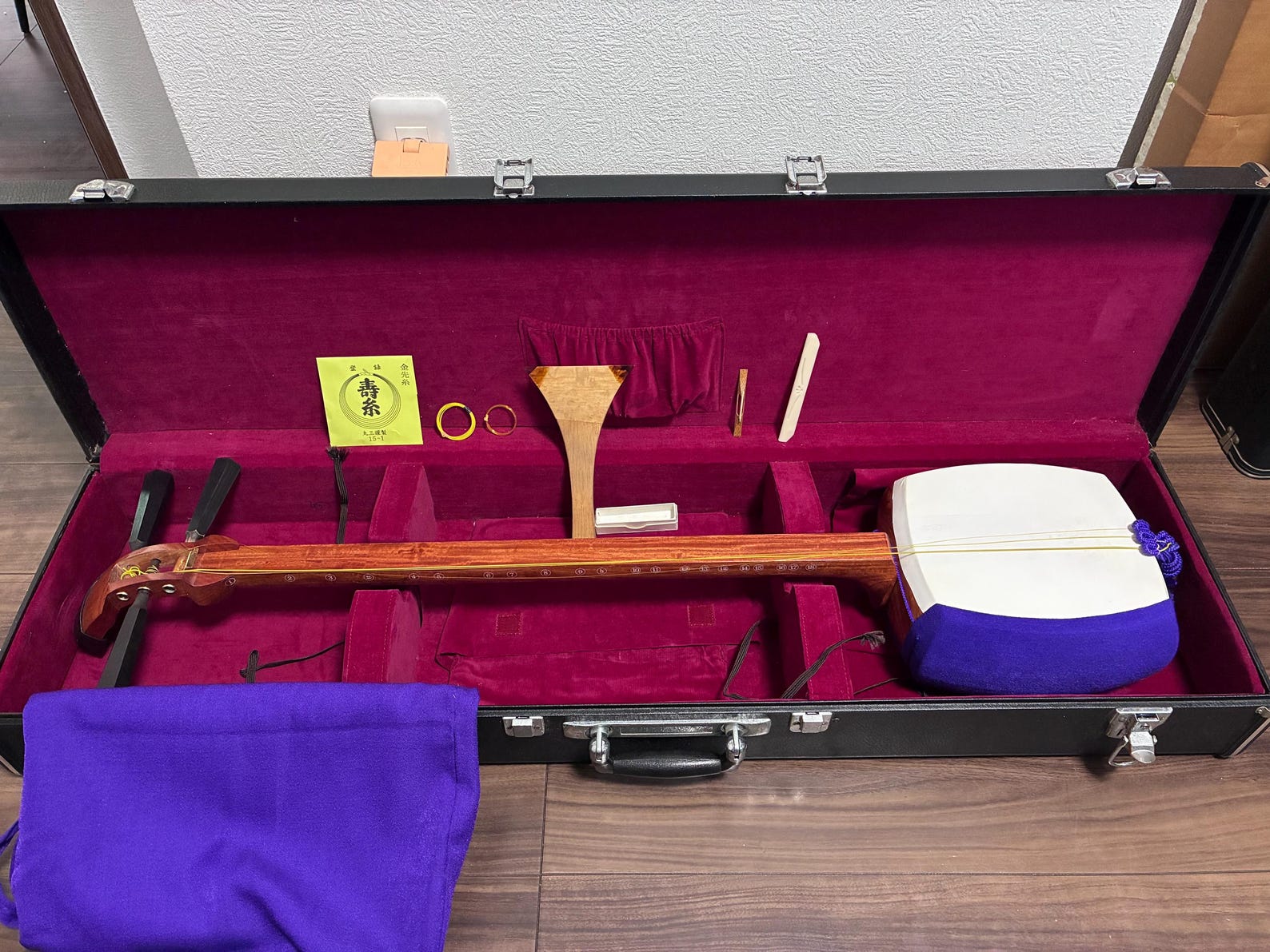
Instrument Profile
| Neck Type | Futozao (thick neck) |
| Neck Construction | Fixed neck construction |
| Skin | Synthetic skin |
| Strings | Strings included |
| Cases | Hard case + purple soft cover |
| Included Accessories | – bachi (plectrum) – koma (bridge) – spare strings |
| Intended Level | Beginner |
Acoustic Characteristics
The Gidayū shamisen is traditionally associated with Bunraku puppet theatre, one of the major classical performing arts of Japan. In this dramatic context, the instrument accompanies gidayū-bushi narration, a powerful vocal storytelling style performed by a tayū (chanter).
Compared to shamisen used in other genres, the gidayū instrument is typically larger and more robust, with a futozao (thick neck) that supports strong string tension and a forceful playing technique. This construction allows the instrument to produce a deep, resonant tone capable of supporting dramatic narrative delivery.
The musical role of the gidayū shamisen differs significantly from styles such as nagauta or kouta. Rather than providing delicate melodic accompaniment, it emphasizes rhythmic punctuation, dramatic emphasis, and interaction with the narrator’s voice, reinforcing the emotional intensity of the storytelling.
In beginner versions such as this set, the use of synthetic skin offers greater durability and stability, making the instrument more suitable for regular practice and study while maintaining the fundamental structural characteristics of the traditional gidayū shamisen.
Strengths ✅
- Designed for the Gidayū tradition of Bunraku theatre music
- Futozao neck supports powerful playing techniques
- Durable synthetic skin suitable for practice environments
- Complete beginner set with essential accessories
- Includes both hard case and soft protective cover
Considerations ⚠️
- Synthetic skin offers slightly less complex resonance than traditional skins
- Designed primarily for narrative accompaniment rather than melodic repertoire
- Larger body and thicker neck may require stronger playing technique
- Beginner construction prioritizes durability over maximum tonal refinement
4) Nagauta Shamisen Intermediate Set
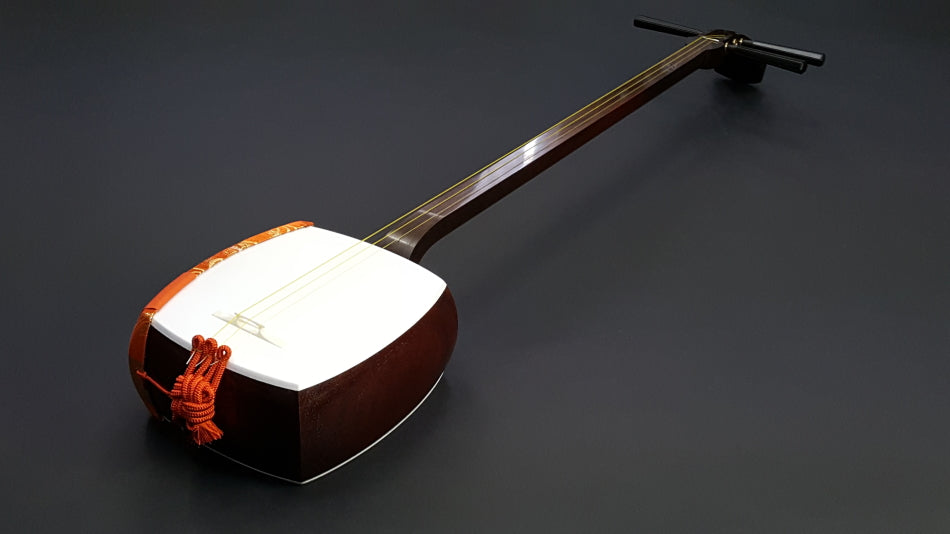
Instrument Profile
| Neck Type | Hosozao (thin neck) |
| Body | Traditional wooden body |
| Skin | Synthetic skin |
| Strings | Synthetic strings |
| Pegs | Traditional-style tuning pegs |
| Construction | Three-piece detachable neck |
| Included Accessories | – Hard case – bachi (plectrum) – spare strings – protective cloth – accessories for maintenance |
| Intended Level | Intermediate / advancing players |
Acoustic Characteristics
This instrument is designed for the nagauta tradition, a style of shamisen music closely associated with kabuki theatre and classical Japanese performing arts. Nagauta repertoire emphasizes clear articulation, rhythmic precision, and expressive melodic ornamentation, qualities supported by the hosozao (thin-neck) construction of the instrument.
The slender neck allows for fast left-hand movement and flexible ornamentation, which are essential for nagauta performance. This design contrasts with the thicker-necked shamisen types used in other genres such as tsugaru or jiuta, where stronger attack and heavier resonance are required.
The instrument uses synthetic skin, a modern adaptation that improves durability and stability compared to traditional skins. While traditional animal skins can produce highly nuanced resonance, synthetic materials offer greater resistance to humidity and temperature changes, making them practical for students and regular practice.
The tonal character of the instrument is typically bright, focused, and articulate, allowing melodic lines and rhythmic accents to remain clearly defined within ensemble performance.
Strengths ✅
- Designed specifically for nagauta performance practice
- Hosozao neck allows fast fingering and ornamentation
- Synthetic skin improves durability and climate stability
- Complete set suitable for intermediate study
- Balanced tone with clear articulation
Considerations ⚠️
- Synthetic skin offers slightly less complex resonance than traditional skins
- Primarily suited for nagauta repertoire, not ideal for tsugaru-style playing
- Intermediate instruments emphasize stability rather than maximum projection
- Players seeking traditional aesthetics may prefer natural skin models
Best Professional Shamisen
5) Kameya Shamisen Online Shop
Kameya is a long-established Japanese workshop and specialized retailer dedicated to the craftsmanship and distribution of traditional shamisen. Through its online shop, the atelier offers a wide range of made-to-order instruments, allowing musicians to choose models suited to the specific musical traditions in which the shamisen is used.
The catalogue includes instruments designed for several major repertoires of Japanese music, such as Tsugaru shamisen, Nagauta shamisen, Jiuta shamisen, Kouta shamisen, Min’yō shamisen, and the Okinawan shamisen (sanshin).
Unlike general music retailers, Kameya focuses specifically on traditional Japanese instruments, offering instruments crafted according to established construction methods while allowing customization to match the needs of different performers. This approach reflects the long-standing relationship between instrument makers, musical lineages, and regional styles within Japanese music culture.
For musicians outside Japan, the Kameya online shop provides access to instruments that can otherwise be difficult to obtain internationally, helping connect contemporary players with the living craftsmanship and performance traditions of the shamisen.

6) Wagakki Ichiba Sinkan
Wagakki Ichiba Sinkan is a specialized Japanese online store dedicated to wagakki, the traditional musical instruments of Japan. With a particularly strong focus on the shamisen, the shop offers one of the widest selections available online, covering the main styles used across Japanese musical traditions: Tsugaru shamisen, Nagauta shamisen, Jiuta shamisen, Kouta shamisen, and folk song shamisen.
The store caters to a wide range of players, from beginners taking their first steps into Japanese music to more experienced musicians looking for higher-quality instruments. Alongside new instruments, Wagakki Ichiba Sinkan also offers used shamisen, which can provide an accessible entry point into instruments that might otherwise be difficult to obtain outside Japan.
Beyond instruments, the shop provides many of the essential accessories and maintenance tools required for shamisen playing, including bachi (plectrums), strings, skins, cases, and replacement parts. This makes it a useful resource not only for purchasing an instrument but also for maintaining and supporting long-term study.
For musicians and researchers interested in Japanese traditional music, Wagakki Ichiba Sinkan represents an important gateway to the living instrument-making culture surrounding the shamisen, connecting contemporary players with instruments shaped by centuries of musical practice.
Final Considerations
The shamisen stands at the intersection of music, theater, and storytelling in Japanese cultural history. Its sound has accompanied puppet dramas, Kabuki stages, and intimate chamber performances for centuries, shaping some of the most recognizable sonic landscapes of Japan.
Learning about the shamisen therefore means engaging not only with an instrument but with a broader artistic tradition that connects music, narrative, and performance.
If you are considering purchasing one, take the time to listen carefully, explore different styles, and choose an instrument whose voice truly resonates with you.
“This article is written from an educational perspective for a global audience. It does not replace the knowledge transmitted within distinct traditions, and readers are encouraged to seek information directly from original sources whenever possible.”
Tag:Strings
