
5 Best Tablas (2026) – Buyer’s Guide for Beginners & Professionals
Disclosure: This article may contain affiliate links. If you buy through these links, we may earn a commission at no additional cost to you. As an Amazon Associate we earn from qualifying purchases.
The tabla is one of the most distinctive percussion instruments of the Indian subcontinent. Recognized for its expressive tonal range and rhythmic sophistication, it occupies a central place in Hindustani classical music while also appearing in devotional music, film soundtracks, and contemporary fusion projects.
More than a simple drum set, the tabla represents a refined rhythmic language developed over centuries. Its performance practice involves not only technique, but also a deep understanding of rhythmic cycles, improvisation, and musical dialogue with melodic instruments.
This guide explores the instrument’s historical development, construction, musical role, and practical considerations for choosing a tabla, concluding with a curated selection of instruments for beginners and advanced players.
Table of Contents

Historical Development of the Tabla
The name tabla likely derives from the Arabic word tabl, meaning “drum,” reflecting historical exchanges between South Asia and the wider Islamic world. The exact origins of the instrument remain debated among scholars, but most evidence suggests that the modern tabla emerged between the 17th and 18th centuries in North India.
Several earlier drums contributed to its development. Among these were the pakhawaj, a barrel-shaped drum used in older forms of North Indian court music, as well as smaller regional drums such as the dholak and duggi. Over time, musicians refined these instruments into a paired drum system capable of producing both precise pitch and complex rhythmic articulation.
By the 18th century, the tabla had become closely associated with Hindustani classical music, particularly as an accompaniment for instruments such as the sitar, sarod and bansuri, as well as for khayal vocal music and the classical dance form kathak.
Different pedagogical lineages known as gharanas later developed distinctive approaches to tabla performance, each preserving specific repertoires, techniques, and aesthetic philosophies.
Structure and Sound Production
The tabla consists of two separate drums that function as a complementary pair. The dayan, typically placed on the player’s dominant side, is the smaller drum and produces clearly defined pitched tones. It is usually carved from hardwood such as sheesham or teak and carefully tuned to match the tonal center of the melodic instrument or vocalist.
The bayan, placed on the opposite side, is larger and capable of producing deep, resonant bass sounds. It is commonly made from brass, copper, or occasionally clay, and its pitch can be subtly altered by applying pressure with the palm during performance.
Both drums share a distinctive feature: the syahi, the black circular patch at the center of the drumhead. This carefully layered mixture of iron filings, rice paste, and other materials modifies the vibration of the skin, allowing the instrument to produce a wide spectrum of harmonically rich tones.
Through combinations of finger, palm, and wrist movements, tabla players articulate a vocabulary of strokes known as bols, each representing a specific sound and technique. These strokes form the basis of rhythmic compositions and improvisations performed within structured rhythmic cycles.
Tabla Within the Rhythmic System of Indian Music
In Hindustani classical performance, the tabla functions within the framework of tāla, the cyclical rhythmic patterns that organize musical time. Each tāla contains a fixed number of beats divided into characteristic groupings, and the tabla player both maintains and elaborates this structure.
Unlike many percussion traditions where the drum primarily marks tempo, tabla performance involves a dynamic interaction with the soloist. The percussionist responds to melodic phrases, develops variations, and participates in complex rhythmic exchanges that can culminate in mathematically precise cadences.
Because of this interactive role, mastering the tabla requires not only technical control but also a deep familiarity with the improvisational language of Indian classical music.
Tabla Gharanas and Stylistic Lineages
Over the centuries, tabla performance developed through distinct pedagogical lineages known as gharanas. These schools transmit repertoire, technique, and aesthetic principles from teacher to student, often across several generations. Among the most influential are the Delhi gharana, considered one of the oldest traditions and known for its clarity of articulation; the Lucknow and Farukhabad gharanas, associated with refined rhythmic phrasing and close connections to kathak dance; the Ajrada gharana, recognized for its complex rhythmic structures; and the Punjab gharana, which emphasizes powerful strokes and virtuosic improvisation.
While modern performers often study across multiple traditions, these gharanas continue to shape the stylistic diversity and pedagogical identity of tabla performance.
Choosing the Best Tabla: A Beginner’s Guide
Selecting a tabla should begin with attentive listening. Even instruments that appear visually similar can produce very different tonal qualities depending on the craftsmanship of the shells, the preparation of the drumheads, and the balance between the two drums.
Other factors to consider include:
- Materials: 1) The dayan is traditionally made from dense hardwoods such as sheesham or teak, which provide stability and clarity of tone. 2) The bayan, typically made from steel, brass, or copper, shapes the instrument’s bass character: steel produces a brighter and less complex tone, brass offers a more balanced and warm response, while copper delivers a deeper, richer, and more resonant sound often preferred in professional settings. 3) The quality of the drumheads and the precision of the syahi application are particularly important, as they determine the clarity and sustain of the instrument’s tones.
- Craftsmanship: Handcrafted tablas generally offer superior responsiveness and tuning stability compared to mass-produced sets.
- Accessories Included: Many instruments are also sold with essential accessories such as ring cushions, a tuning hammer, and protective covers, which help maintain proper positioning and tuning during practice and performance.
- Level of Ability: For beginners, a well-balanced mid-range instrument can provide an excellent introduction, while advanced players often seek tablas made by specialized craftsmen with long-standing expertise.
Types of Tabla
| Type | Characteristics | Best For |
| Student Tabla | Basic materials, easier tuning | Beginners |
| Semi-Professional | Better wood and syahi quality | Intermediate players |
| Professional Tabla | Handmade, refined tone, stable tuning | Advanced performers |
| Studio / Export Models | Standardized, consistent quality | Recording & global market |
How to Choose Your First Tabla
Choosing your first tabla is less about finding the “best” instrument in absolute terms, and more about selecting one that matches your current stage, context of use, and long-term goals.
A useful starting point is to consider how you plan to use the instrument. If your focus is regular practice and foundational learning, a well-built student or mid-range tabla will provide sufficient tonal clarity without requiring the investment of a concert-grade set. If, on the other hand, you are already studying with a teacher or planning to perform, it may be worth choosing an instrument with greater tonal depth and tuning stability from the beginning.
Another important factor is tuning readiness. Some beginner instruments come pre-tuned to common pitches (such as C# or D#), which can simplify the initial experience. More advanced instruments, however, may require a better understanding of tuning and maintenance, offering greater flexibility but also demanding more familiarity with the instrument.
You should also consider the practical aspects of ownership. A complete set that includes cushions, a tuning hammer, and a protective case can make a significant difference in day-to-day use, especially if you need to transport the instrument or maintain it regularly.
Finally, it is worth thinking in terms of progression rather than perfection. A first tabla does not need to cover every musical possibility. Instead, it should provide a stable and responsive foundation that allows you to develop listening skills, rhythmic awareness, and basic control, elements that will remain essential as you move toward more advanced instruments.
The following selection reflects these criteria and aims to support both beginners and advanced players in making an informed choice.
The 5 Best Tabla
Best Tabla for Beginners
1) Kaayna Musicals Tabla
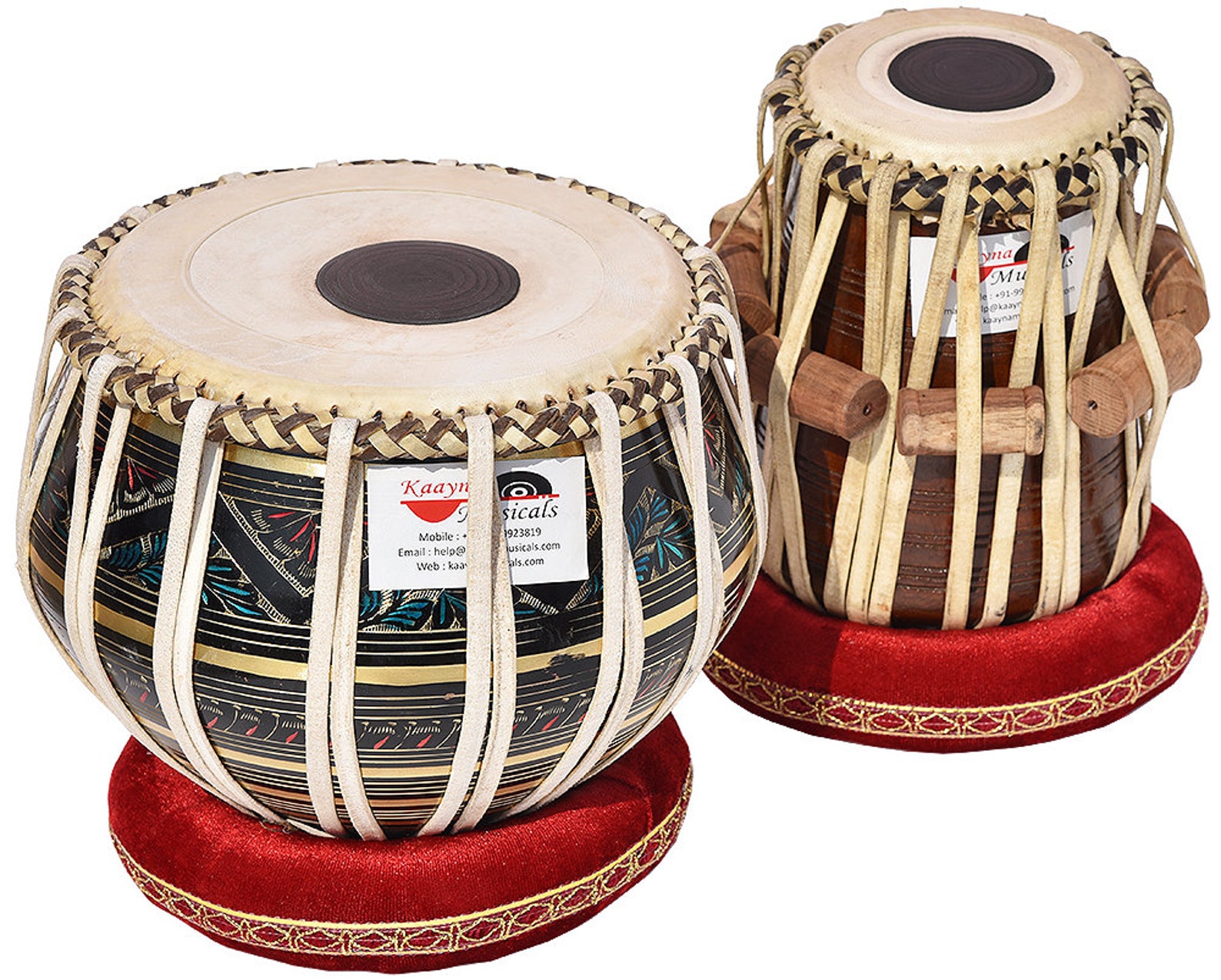
Instrument Profile
| Brand | Kaayna Musicals |
| Components | Dayan (treble drum) + Bayan (bass drum) |
| Dayan Material | Sheesham (Indian rosewood) |
| Bayan Material | Brass (approx. 3 kg) |
| Drumheads | Handmade goatskin |
| Tuning System | Camel leather straps with wooden blocks |
| Bayan Size | approx. 9–9.25 inches diameter, 10–11 inches height |
| Dayan Size | approx. 5–5.75 inches diameter |
| Finish | Black painted designer bayan |
| Weight | Approx. 6–7 kg total (handmade variation possible) |
| Included Accessories | Gig bag, tuning hammer, cushions, drum covers |
| Construction | Fully handmade |
Acoustic Characteristics
The Kaayna Musicals Tabla Set produces the distinctive tonal palette of North Indian classical percussion, combining clear, articulated treble tones from the dayan with deep, modulating bass sounds from the bayan.
The sheesham wood dayan offers a focused, bright tone with precise attack, essential for executing intricate rhythmic patterns (bols). The brass bayan provides a rich, resonant bass with pitch modulation, allowing players to shape the sound dynamically through hand pressure.
Both drums feature traditional goatskin heads with the central black tuning paste (syahi), which enhances harmonic overtones and creates the characteristic ringing, pitch-defined sound unique to tabla. The result is a highly expressive instrument capable of both rhythmic complexity and subtle tonal variation.
Strengths ✅
- Authentic handmade tabla set suitable for traditional Indian music
- Combination of sheesham wood and brass provides balanced tonal contrast
- Includes complete accessory kit (bag, hammer, cushions, covers)
- Capable of both precise articulation and expressive pitch modulation
- Suitable for students, intermediate players, and performance contexts
Considerations ⚠️
- Handmade construction may include minor visual imperfections
- Requires proper tuning and maintenance for optimal performance
- Sensitive to humidity and temperature changes
2) Tabla Meinl Percussion Set
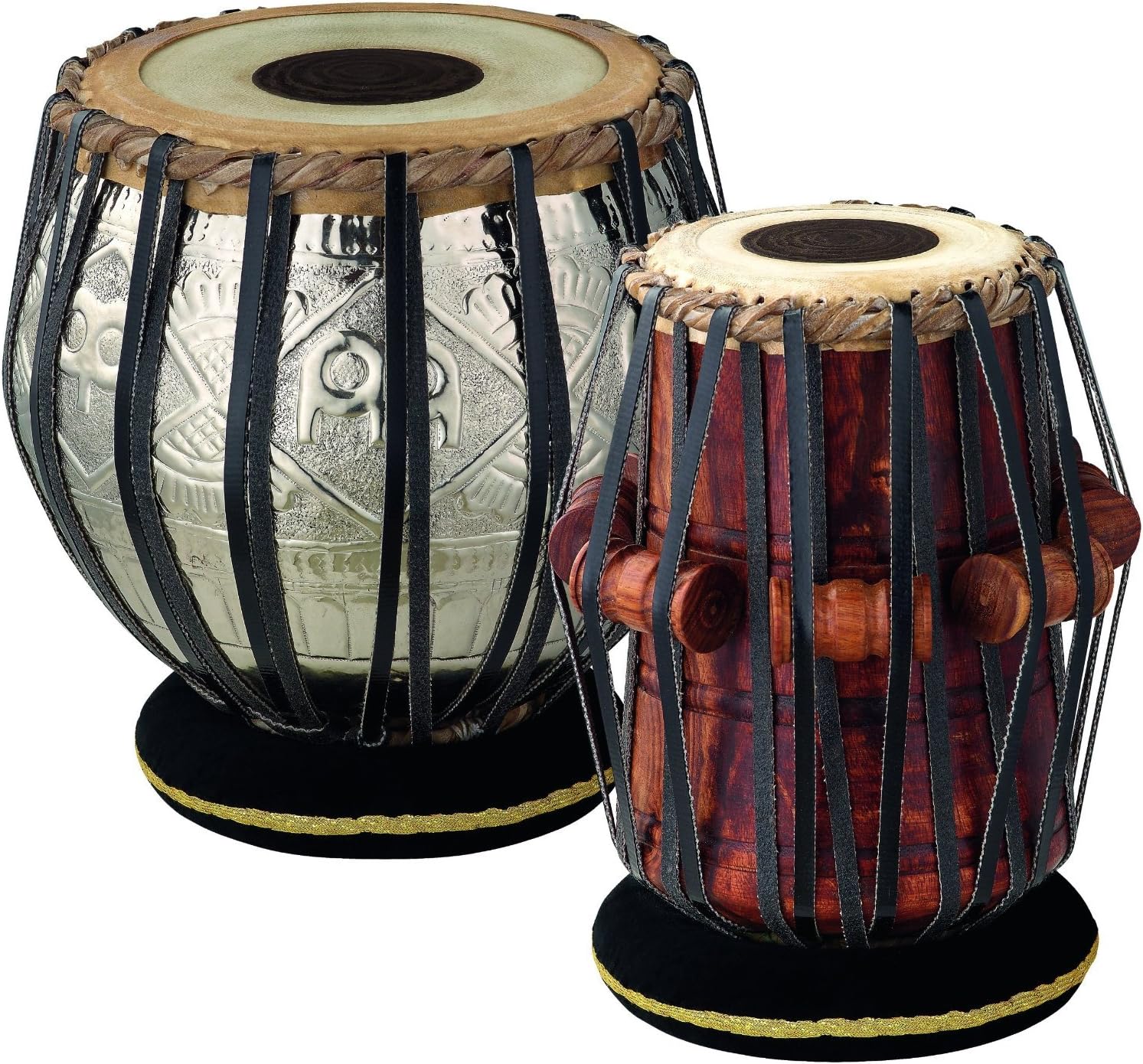
Instrument Profile
| Brand | Meinl Percussion |
| Components | Dayan (treble drum) + Bayan (bass drum) |
| Dayan Material | Rosewood with goatskin head |
| Bayan Material | Chrome-plated copper with goatskin head |
| Drumheads | Natural goatskin with syahi (black tuning paste) |
| Tuning System | Traditional leather straps |
| Bayan Diameter | approx. 21.59 cm (8.5”) |
| Dayan Diameter | approx. 13.97 cm (5.5”) |
| Included Accessories | Padded rings (cushions), tuning hammer |
| Construction | Traditional design with modern manufacturing standards |
Acoustic Characteristics
The Meinl Percussion Tabla Set delivers a clear and balanced tonal response suitable for both traditional and contemporary contexts. The rosewood dayan produces a bright, articulate tone with precise attack, making it ideal for detailed rhythmic articulation and fast passages.
The chrome-plated copper bayan provides a deep, resonant bass with smooth pitch modulation, allowing expressive control through hand pressure. The goatskin drumheads with traditional syahi enhance harmonic overtones, giving the instrument its characteristic ringing clarity and tonal depth.
Overall, the set offers a well-balanced combination of clarity, resonance, and projection, making it suitable for practice, recording, and performance.
Strengths ✅
- Reliable build quality from an established percussion brand
- Balanced tonal contrast between bright dayan and resonant bayan
- Traditional construction with modern consistency
- Includes essential accessories (cushions and tuning hammer)
- Suitable for students and intermediate players
Considerations ⚠️
- Factory-made instrument compared to fully handcrafted tabla sets
- Requires proper tuning and maintenance for optimal sound
- Sensitive to environmental conditions (humidity, temperature)
- May lack some tonal complexity compared to high-end professional tabla
3) Maharaja Tabla Student Set

Instrument Profile
| Brand | Maharaja Musicals |
| Components | Dayan (treble drum) + Bayan (bass drum) |
| Dayan Material | Sheesham wood |
| Bayan Material | Steel |
| Drumheads | Handmade animal skin (puddi) |
| Tuning System | Traditional leather straps |
| Tuning | Dayan tuned to C# or D# |
| Bayan Diameter | approx. 5 – 5.5 inches |
| Dayan Diameter | approx. 9 – 9.25 inches |
| Included Accessories | Cushions, drum covers, tuning hammer, basic gig bag |
| Construction | Handmade |
Acoustic Characteristics
The Maharaja Tabla Student Set offers a balanced and accessible introduction to the tonal world of Indian percussion. The sheesham wood dayan produces a clear and focused treble tone, suitable for learning basic bols and rhythmic articulation.
The steel bayan generates a deep but slightly brighter bass response compared to brass models, with the ability to create pitch modulation through hand pressure. The handmade drumheads (puddi), crafted from treated animal skin, contribute to a rich overtone structure and traditional tonal character, though with slightly less complexity than higher-end professional instruments.
Overall, the set provides a responsive and well-balanced sound, making it suitable for practice and early-stage performance.
Strengths ✅
- Affordable entry-level tabla set designed for students
- Handmade drumheads provide authentic tonal character
- Sheesham wood dayan ensures clear and articulate treble tones
- Complete accessory package included (bag, hammer, cushions, covers)
- Pre-tuned dayan (C# or D#) simplifies initial setup
Considerations ⚠️
- Steel bayan offers less warmth and depth compared to brass or copper models
- Basic gig bag is not padded, offering limited protection
- Handmade construction may include minor cosmetic imperfections
- Requires regular tuning and proper environmental care
- Primarily suited for beginners rather than advanced performance
Best Professional Tabla
4) Copper Bayan Tabla – Professional Model
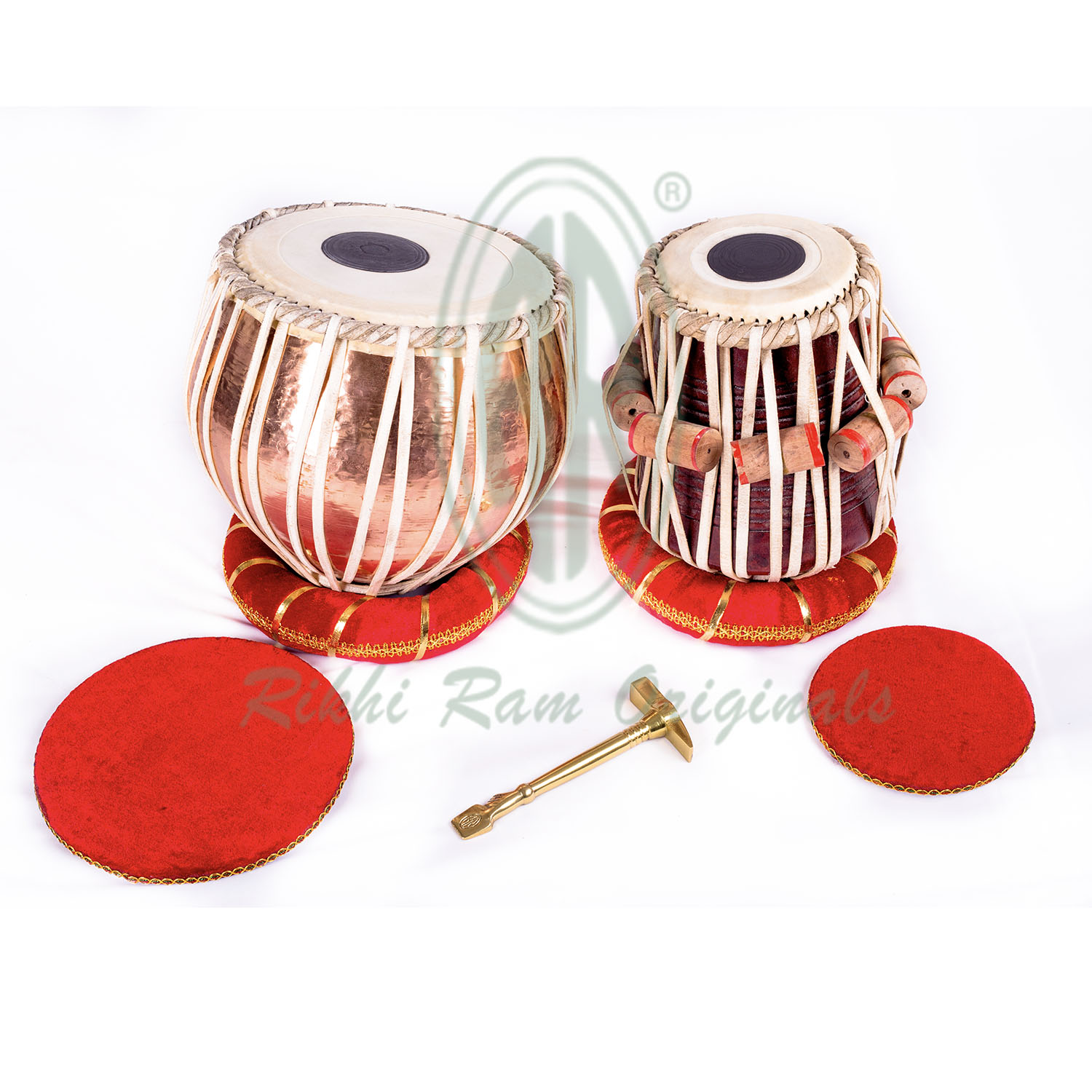
Instrument Profile
| Brand | Rikhi Ram |
| Components | Dayan (treble drum) + Bayan (bass drum) |
| Dayan Material | Seasoned hardwood |
| Bayan Material | Copper (approx. 4 kg) |
| Drumheads | Handmade puris (traditional skins) |
| Tuning System | Traditional leather straps |
| Sound Quality | Concert-grade |
| Case | Thermo-fiber protective case |
| Case Dimensions (1 set) | approx. 65 × 31 × 36 cm |
| Case Dimensions (extended) | approx. 89 × 43 × 31 cm |
| Included Accessories | Ring set (cushions), tuning hammer |
| Construction | Handmade |
Acoustic Characteristics
The Copper Bayan Tabla – Professional Model is designed to deliver a rich, full-bodied sound suitable for concert performance. The copper bayan produces a deep, warm bass with excellent resonance and smooth pitch modulation, allowing for expressive tonal shaping through hand pressure.
The seasoned wooden dayan provides a clear, articulate treble response with strong projection, essential for executing complex rhythmic patterns with precision. The handmade puris (drumheads) enhance the harmonic spectrum, producing the distinctive ringing overtones and tonal depth characteristic of high-quality tabla.
Together, the set offers a balanced interplay between clarity and resonance, making it suitable for both solo performance and ensemble contexts.
Strengths ✅
- Professional-grade tabla set with concert-quality sound
- Copper bayan provides deep, warm, and resonant bass
- Seasoned wood dayan ensures clarity and articulation
- Handmade drumheads enhance tonal richness and complexity
- Includes durable thermo-fiber case for protection and transport
- Suitable for advanced students and professional performers
Considerations ⚠️
- Heavier instrument due to copper bayan construction
- Requires regular tuning and maintenance for optimal performance
- Higher cost compared to student-level tabla sets
- Sensitive to environmental conditions such as humidity and temperature
5) Tablasitar.com
TablaSitar.com is a specialized online store dedicated to Indian classical instruments, with a strong focus on tabla sets for all levels of players, from beginners to professional performers. The platform offers a carefully curated selection of tablas featuring different materials, such as steel, brass, and copper bayan paired with seasoned wooden dayan, allowing musicians to choose instruments based on their tonal preferences and performance needs.

The site stands out for its emphasis on traditional craftsmanship, offering instruments fitted with handmade drumheads (puri) and built according to classical construction methods. Many models are designed for concert use, with attention to tonal balance, tuning stability, and durability.
In addition to instruments, TablaSitar.com provides essential accessories such as cases, tuning hammers, and cushions, making it a comprehensive resource for tabla players. Its selection makes it particularly suitable for students progressing to intermediate levels as well as professional musicians seeking reliable, performance-ready instruments.
Final Considerations
The tabla is a sophisticated rhythmic language developed through centuries of musical practice. Its ability to combine precise pitch, intricate rhythmic articulation, and improvisational dialogue makes it one of the most refined drum traditions in the world.
Approaching the tabla therefore means engaging with a broader musical system in which rhythm, melody, and structure interact continuously.
For listeners interested in hearing the instrument in its musical context, exploring recordings of Hindustani classical music offers one of the most direct ways to appreciate how the tabla shapes the rhythmic architecture of performance.
“This article is written from an educational perspective for a global audience. It does not replace the knowledge transmitted within distinct traditions, and readers are encouraged to seek information directly from original sources whenever possible.”
Tag:Percussions
