
9 Best Setars (2026) – Buyer’s Guide for Beginners & Professionals
Disclosure: This article may contain affiliate links. If you buy through these links, we may earn a commission at no additional cost to you.
The setar (سهتار) is a long-necked lute central to Iranian classical music. Belonging to the broader tanbur family, it is known for its intimate volume, refined articulation, and close association with solo performance within the radif tradition.
Rather than being defined solely by symbolism, the setar occupies a precise musical role: it is one of the primary instruments used to interpret and transmit the modal system known as dastgah.
This guide explores the instrument’s historical development, construction, musical role, and practical considerations for choosing a setar, concluding with a curated selection of instruments for beginners and advanced players.
Table of Contents

The History of the Setar
The word setar derives from Persian: seh (three) and tar (string). Historically, the instrument had three strings. The addition of a fourth string is widely attributed to the 19th-century musician Moshtagh Ali Shah, though documentation varies and the story is partly preserved through oral tradition.
The setar developed alongside other Persian long-necked lutes such as the tar. While the tar became prominent in ensemble settings due to its stronger projection, the setar maintained a more intimate role, particularly in solo performance and private musical gatherings.
From the Safavid period onward (16th–18th centuries), the instrument became increasingly associated with cultivated urban musical circles. Its connection to Sufi practice is historically documented in some contexts, but it is important to note that the setar’s role extends beyond mysticism into formal classical repertoire and pedagogical transmission.
Today, the setar remains one of the key instruments for performing the radif, the canonical repertoire of Persian classical music codified in the 19th century.
Prominent modern performers include: Ahmad Ebadi, Mohammad Reza Lotfi and Hossein Alizadeh.
Musical Role and Sound
The setar is primarily a solo instrument, valued for nuance rather than volume. Its dynamic range is subtle, making it especially suited for detailed exploration of microtonal inflection within the dastgah system.
It is played with the nail of the right index finger (no plectrum), allowing for delicate control of articulation and rhythmic flexibility.
The technique emphasizes fine dynamic gradation, intricate ornamentation, often reminiscent of vocal tahrir adapted to instrumental expression, and precise intonation within modal structures.
Unlike louder plucked lutes, the setar often invites close listening rather than projection.
How Does the Setar Work?
The resonating body, vaguely pear-shaped, is often carved from a single block of wood, typically mulberry or walnut. Mulberry, in particular, is highly prized in Persian lutherie for its bright, crystalline sound.
The long, slender neck has between 22 and 28 movable frets, traditionally tied with silk or gut. This flexibility allows the player to adapt the tuning to the microtonal intervals required in different dastgah and gusheh.
All four strings are made of metal, with varying thicknesses, each contributing to the setar’s delicate, shimmering voice.
Transmission and Contemporary Context
The setar is learned primarily through oral transmission, within the teacher–student (ostad–shagird) relationship. Mastery involves internalizing the radif, not simply learning pieces.
While often associated with introspective repertoire, the instrument today appears in diverse contexts, including chamber ensembles and contemporary cross-cultural collaborations. Its identity continues to evolve without losing its grounding in modal tradition.
Choosing the Best Setar: A Beginner’s Guide
When buying a Setar, the first and most important step is to listen to its sound and pay attention to the emotions it evokes in you. If the tone doesn’t resonate with you, it’s better to keep searching until you find an instrument that speaks more clearly to your musical sensibilities — even before considering technical features.
Other factors to consider include:
- Wood Type: Mulberry gives a brighter sound, while walnut offers warmer tones.
- Body Size: A larger body (Kamaliyan model) offers deeper bass, while a smaller body (Hashemi model) produces sharper, higher tones.
- Fret Placement: Frets should be securely tied and adjustable. Poor fret positioning can compromise modal accuracy.
- Included Accessories: A good beginner setar should come with a case, spare strings, and manuals or tutorials, especially helpful for first-time learners.
- String Setup: Most modern setars use steel strings, though gauge and tension vary. A properly adjusted instrument should feel responsive without excessive finger pressure.
- Teacher Guidance: Given the modal complexity of Persian music, consulting a teacher before purchasing is strongly recommended. Small construction differences can significantly affect playability.
The following selection reflects these criteria and aims to support both beginners and advanced players in making an informed choice.
Top 9 Setars to Buy
Best Setar for Beginners
1) Entry Level Setar

Instrument Profile
| Body (Bowl) | Mulberry wood |
| Neck Material | Walnut |
| Tuning Pegs | Walnut |
| Total Length | approx. 86 cm |
| String Length (Scale) | approx. 66 cm |
| Weight | approx. 0.355 kg |
| Strings | 4 metal strings |
| Included Accessories | Soft case, extra strings |
Acoustic Characteristics
This entry level Setar produces a delicate, intimate, and highly nuanced sound, very different from louder plucked instruments. Its small mulberry bowl and light construction create a soft, warm tone with subtle resonance, ideal for expressive and introspective playing.
Unlike instruments designed for projection, the setar emphasizes clarity, microtonal precision, and dynamic sensitivity, responding closely to the player’s touch. Traditionally played with the fingernail rather than a pick, it allows for fine control of articulation and phrasing, making it central to Persian classical music (radif and dastgah systems).
The overall sound is meditative and refined, suited for solo performance and intimate musical settings rather than large ensembles.
Strengths ✅
- Widely used in Irish music education and beginner instruction
- Clear, stable tone suitable for learning traditional melodies
- Durable brass construction with lightweight design
- Standard D tuning compatible with most Irish session repertoire
Considerations ⚠️
- The tonal character is brighter than whistles with wooden mouthpieces
- Designed primarily as an entry-level instrument rather than a handcrafted professional model
- Breath response may feel different compared with traditional conical whistles
2) High Quality Setar by Hormoz
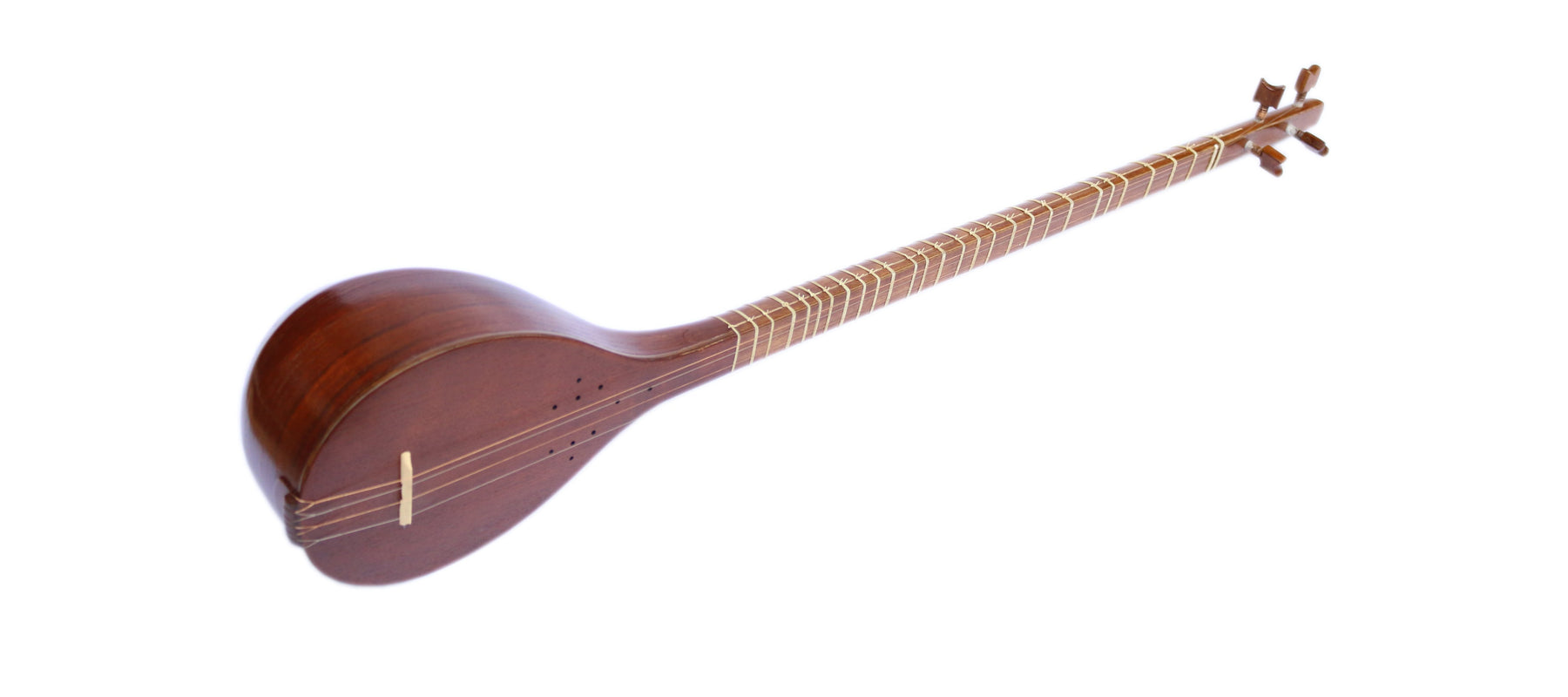
Instrument Profile
| Maker | Hormoz |
| Bowl | Mulberry wood |
| Soundboard | Mulberry wood |
| Neck Material | Walnut |
| Tuning Pegs | Walnut |
| Strings | 4 metal strings |
| Included Accessories | Soft case, extra strings |
Acoustic Characteristics
The High Quality Setar by Hormoz offers a refined, warm, and highly articulate sound, rooted in the traditional aesthetics of Persian classical music. The use of mulberry for both the face and bowl provides a balanced tonal response, combining soft warmth with clear note definition.
Compared to entry-level instruments, this setar delivers greater resonance, sustain, and tonal depth, allowing for more expressive phrasing. Its lightweight structure enhances sensitivity to touch, making it particularly responsive to subtle dynamic variations and ornamentation.
The sound remains intimate and meditative, but with improved clarity and projection within its natural acoustic limits, making it well-suited for both dedicated practice and refined solo performance.
Strengths ✅
- High-quality craftsmanship by an experienced maker (Hormoz)
- Warm, balanced tone with improved resonance and clarity
- Traditional mulberry construction for authentic sound
- Highly responsive to nuanced playing and ornamentation
- Lightweight and comfortable to handle
- Includes soft case and extra strings
Considerations ⚠️
- Low volume compared to larger string instruments
- Requires precise technique and control (often played with fingernail)
- Sensitive to environmental changes (humidity, temperature)
- Primarily suited for Persian classical music contexts
3) Left Hand Setar by Nava
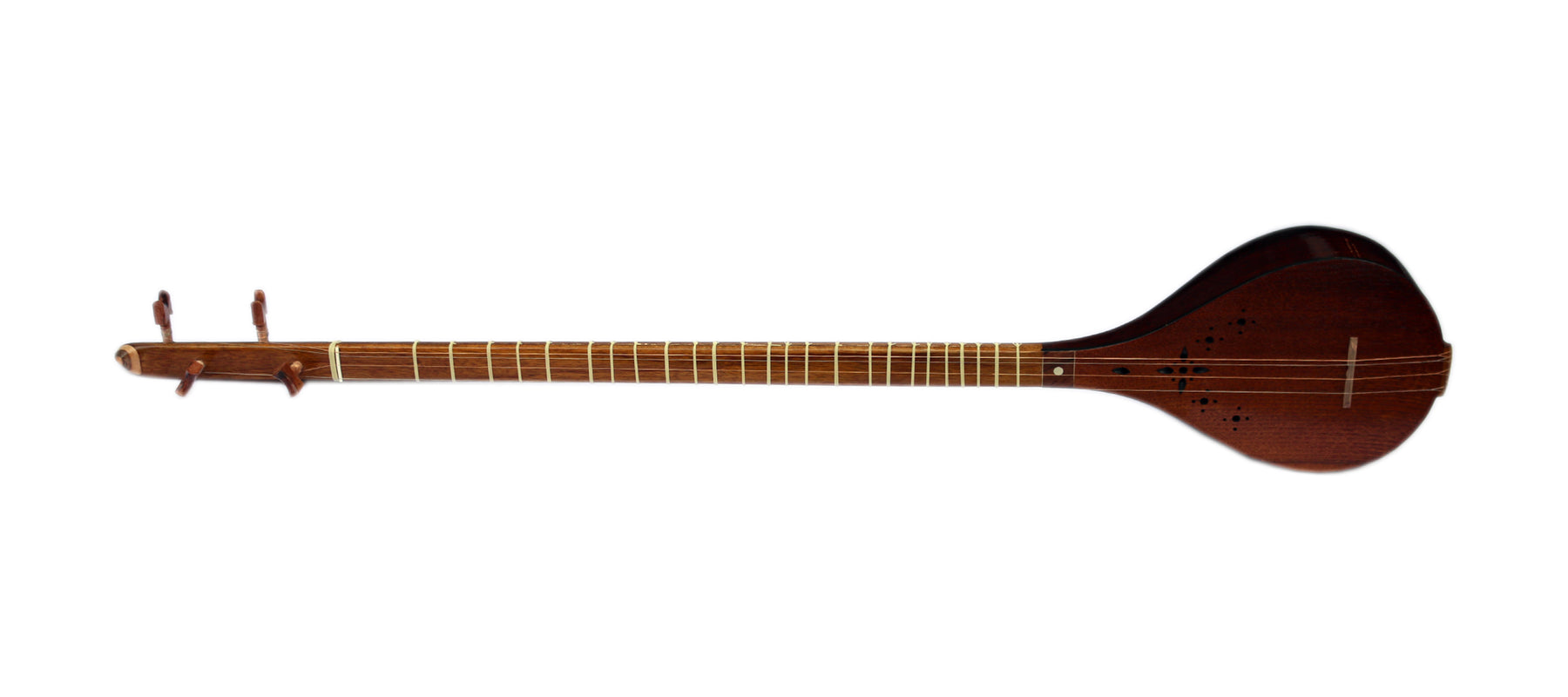
Instrument Profile
| Maker | Nava |
| Bowl | Mulberry wood |
| Orientation | Left-handed |
| Total Length | approx. 86 cm |
| String Length (Scale) | approx. 66 cm |
| Weight | approx. 0.355 kg |
| Strings | 4 metal strings |
Acoustic Characteristics
The Left-Handed Setar by Nava maintains the delicate, intimate, and highly expressive tonal character of the traditional setar, adapted for left-handed players. Its mulberry bowl contributes to a warm, soft resonance, while the lightweight construction enhances sensitivity and responsiveness to touch.
The instrument produces a clear yet subtle sound, ideal for the intricate phrasing and microtonal nuances of Persian classical music. Like all setars, it is typically played with the fingernail, allowing for precise articulation and dynamic control.
Its tonal identity remains meditative and refined, best suited for solo performance or small, intimate settings.
Strengths ✅
- Left-handed design for natural ergonomics and comfort
- Lightweight and highly portable
- Warm, intimate tone suited for expressive solo playing
- Traditional mulberry construction for authentic sound
- Responsive to subtle articulation and ornamentation
Considerations ⚠️
- Limited availability compared to right-handed models
- Low volume and limited projection
- Requires specific technique (fingernail playing)
- Sensitive to environmental conditions
- Primarily suited for Persian classical music contexts
Best Professional Setar
4) Professional Persian Setar by Shahnaz

Instrument Profile
| Model | SHS-304 |
| Maker | Shahnaz |
| Bowl | Mulberry wood |
| Soundboard | Mulberry wood |
| Neck Material | Walnut |
| Tuning Pegs | Walnut |
| Strings | 4 metal strings |
| Included Accessories | Soft case, extra strings |
Acoustic Characteristics
The Professional Persian Setar SHS-304 by Shahnaz delivers a refined, warm, and deeply expressive sound, aligned with the highest standards of Persian classical instrument making. The mulberry soundboard and bowl provide a balanced tonal profile, combining soft warmth with clear articulation and controlled sustain.
Compared to entry-level models, this instrument offers greater tonal depth, improved resonance, and enhanced dynamic responsiveness, allowing for more precise interpretation of the Persian radif. The sound remains intimate and subtle, yet with a notable clarity and definition that supports complex ornamentation and microtonal expression.
Its responsiveness to touch makes it particularly suitable for advanced players seeking nuanced phrasing and expressive control.
Strengths ✅
- Professional-grade instrument by an experienced maker (Shahnaz)
- Warm, balanced tone with enhanced clarity and sustain
- High-quality mulberry construction for authentic sound
- Excellent responsiveness for nuanced articulation and ornamentation
- Suitable for advanced Persian classical repertoire
- Includes soft case and extra strings
Considerations ⚠️
- Low volume and limited projection compared to larger instruments
- Requires refined technique (fingernail playing)
- Sensitive to environmental changes (humidity, temperature)
- Primarily suited for Persian classical music contexts
5) Electric Acoustic Setar With Equalizer

Instrument Profile
| Bowl | Mulberry wood |
| Soundboard | Mulberry wood |
| Neck Material | Walnut |
| Tuning Pegs | Walnut |
| Electronics | Built-in pickup and equalizer |
| Compatibility | Amplifier-ready |
| Strings | 4 metal strings |
| Included Accessories | Soft case, extra strings |
Acoustic Characteristics
The Electric Acoustic Setar with Equalizer blends the intimate tonal character of the traditional setar with the flexibility of modern amplification. Acoustically, it maintains a warm, soft, and nuanced sound, with the characteristic delicate resonance and clarity of mulberry construction.
When amplified, the built-in pickup captures the instrument’s subtle dynamics, while the integrated equalizer allows for precise tonal shaping, enabling adjustments to bass, midrange, and treble frequencies depending on the performance context.
This dual capability expands the instrument’s range from quiet, introspective solo playing to stage-ready performance, where greater projection and control are required. The result is a sound that remains expressive and detailed while gaining presence and versatility in modern settings.
Strengths ✅
- Hybrid acoustic-electric design for versatile use
- Built-in equalizer for real-time tone control
- Maintains traditional setar tonal character
- Suitable for live performance and recording
- High-quality materials (mulberry and walnut)
- Includes soft case and extra strings
Considerations ⚠️
- Requires amplification setup to fully utilize electric features
- Slightly alters the natural acoustic response
- Electronics add complexity compared to traditional models
- Low acoustic volume remains a limitation without amplification
- Less aligned with strictly traditional performance contexts
6) Flat Setar by Movlana

Instrument Profile
| Model | Ketabi (Flat Setar) |
| Maker | Movlana |
| Bowl | Mulberry wood |
| Soundboard | Mulberry wood |
| Neck Material | Walnut |
| Scale Length (Bridge to Nut) | approx. 64 cm |
| Total Length | approx. 84 cm |
| Bowl Depth | approx. 6 cm |
| Strings | 4 metal strings |
| Included Accessories | Soft case, extra strings |
Acoustic Characteristics
The Setar Ketabi (Flat Setar) offers a clear, focused, and controlled sound, shaped by its flat body design. While traditional setars rely on a rounded bowl for resonance, this model produces a tone that is more direct and immediate, with slightly reduced natural sustain but enhanced clarity.
Despite its non-traditional structure, it maintains the warm and delicate tonal identity of the setar, thanks to the mulberry soundboard. The sound is balanced and articulate, making it suitable for precise melodic work and practice.
The overall character remains intimate and expressive, though with a more modern acoustic response compared to traditional bowl-backed instruments.
Strengths ✅
- Ergonomic flat design for enhanced comfort
- Lightweight and easy to carry
- Clear, focused tone with good articulation
- Suitable for extended practice sessions and travel
- High-quality traditional materials (mulberry and walnut)
- Includes soft case and extra strings
Considerations ⚠️
- Modern design departs from traditional aesthetics and acoustics
- Low acoustic volume remains a limitation
- Primarily suited for practice, travel, or modern contexts
7) Bam Setar, 3 Strings

Instrument Profile
| Model | Bam Setar (3 strings) |
| Maker | Movlana |
| Bowl | Mulberry wood |
| Soundboard | Mulberry wood |
| Neck Material | Walnut |
| Scale Length (Bridge to Nut) | approx. 64 cm |
| Total Length | approx. 84 cm |
| Strings | 3 metal strings (bam configuration) |
| Included Accessories | Soft case, extra strings |
Acoustic Characteristics
The Bam Setar (3 strings) offers a deeper, warmer, and more resonant tonal character compared to the standard 4-string setar. The focus on “bam” (bass-oriented) strings shifts the instrument’s voice toward a richer low-end response, while maintaining the setar’s characteristic clarity and intimacy.
The mulberry body and soundboard provide a cohesive and balanced resonance, enhancing tonal warmth and sustain. Compared to traditional setars, the sound is slightly fuller and rounder, with a more pronounced emphasis on lower frequencies.
Despite this shift, the instrument retains its delicate articulation and expressive nuance, making it suitable for both traditional Persian repertoire and more experimental or contemporary interpretations.
Strengths ✅
- Unique 3-string configuration with deeper, bass-oriented tone
- Warm, rich sound with enhanced low-end presence
- High-quality mulberry construction for tonal consistency
- Lightweight and comfortable to play
- Suitable for both traditional and experimental contexts
- Includes soft case and extra strings
Considerations ⚠️
- Less common configuration compared to standard 4-string setar
- Reduced melodic range due to fewer strings
- Requires adaptation for players accustomed to traditional setar
- Limited availability of learning resources for this variant
8) Shourangiz Setar, 6 Strings

Instrument Profile
| Model | ZSH-4 |
| Construction | Handcrafted |
| Bowl | Mulberry wood |
| Soundboard | Hybrid: Mulberry wood + goat skin |
| Neck Material | Walnut |
| Tuning Pegs | Walnut |
| Strings | 6 metal strings |
| Included Accessories | Soft case, extra strings |
Acoustic Characteristics
The Shourangiz Setar (6 strings) offers a hybrid tonal identity, combining the intimacy of the traditional setar with the resonance and projection of skin-top instruments like the tar.
The mulberry wood bowl provides a warm, rounded tonal foundation, while the innovative half wood / half goat skin soundboard introduces a more percussive, raw, and dynamically responsive character. This results in a sound that is richer, louder, and more textured than a standard setar, with enhanced sustain and presence.
The 6-string configuration further expands the instrument’s capabilities, allowing for greater harmonic depth, fuller chordal textures, and more complex melodic interplay. The overall sound is balanced between clarity and depth, capable of both delicate phrasing and more powerful expression.
Strengths ✅
- Hybrid soundboard (wood + goat skin) for a unique tonal character
- Greater volume and projection compared to traditional setar
- 6-string configuration expands musical possibilities
- Warm yet articulate sound with enhanced dynamic range
- High-quality materials (mulberry and walnut)
- Suitable for both traditional and contemporary contexts
- Includes soft case and extra strings
Considerations ⚠️
- Less traditional than the standard 4-string setar
- Goat skin is sensitive to humidity and temperature changes
- Requires adaptation for players used to traditional setar technique
- More complex tonal response may require refined control
- Niche instrument with fewer learning resources available
9) Dalbergia Nigra Setar by Omer Inci

Instrument Profile
| Model | INCI-4 |
| Maker | Omer Inci |
| Tuning | D tuning |
| Bowl | Dalbergia Nigra (Brazilian Rosewood) |
| Soundboard | Canadian Cedar |
| Fingerboard | Dalbergia Nigra (with Pernambuco inlays) |
| Decorative Inlays | Mexican abalone shell |
| Tuning Pegs | Wittner precision pegs |
| Strings | 6 metal strings |
| Construction | Handcrafted (premium materials) |
| Included Accessories | Soft case, extra strings |
Acoustic Characteristics
The Dalbergia Nigra Setar by Omer Inci offers a distinctively bright, refined, and highly resonant tonal character, setting it apart from traditional mulberry-based setars.
The Canadian cedar soundboard contributes to a quick, responsive attack and enhanced clarity, while the Dalbergia Nigra (Brazilian rosewood) bowl and fingerboard provide deep resonance, sustain, and harmonic richness. This combination results in a sound that is both articulate and full-bodied, with greater projection and tonal complexity compared to standard models.
The use of premium materials allows for a wider dynamic range, supporting both delicate phrasing and more defined articulation. The instrument’s voice is clear, balanced, and slightly brighter, making it suitable for refined solo performance and contemporary interpretations of Persian music.
Strengths ✅
- Premium materials (Dalbergia Nigra, Canadian cedar, Pernambuco)
- Bright, clear tone with enhanced resonance and sustain
- Greater projection compared to traditional setar
- Wittner precision pegs for stable and accurate tuning
- High-level craftsmanship by Omer Inci
- Unique aesthetic with abalone inlays
- Suitable for advanced players and refined performance contexts
Considerations ⚠️
- Less traditional tonal character compared to mulberry setars
- Premium materials increase cost and exclusivity
- Requires careful maintenance due to high-end woods
- May not suit purists seeking strictly traditional sound
- Still relatively low volume compared to larger instruments
Final Considerations
The setar is not defined by mysticism alone, nor by antiquity. It is a refined modal instrument shaped by centuries of pedagogical continuity, urban musical culture, and careful craftsmanship.
Approaching the setar requires attentive listening, patience with microtonal nuance, and engagement with the musical system that gives it meaning.
This guide offers a practical starting point for informed and respectful exploration.
“This article is written from an educational perspective, with the aim of supporting respectful access for learners and musicians worldwide. It does not replace the knowledge transmitted within the communities where the Setar originates, but seeks to provide context, orientation, and care when approaching the instrument.”
Tag:Strings
